There is one rule for the industrialist and that is: Make the best quality of goods possible at the lowest cost possible, paying the highest wages possible

Showing posts with label Technology. Show all posts

Disagreements on cyber risk East-West "Cold War"


Disagreements on cyber risk East-West "Cold War" - With worries growing over computer hacking, data theft and the risk of digital attacks destroying essential systems, western states and their allies are co-operating closer than ever on cyber security.

But as they do so, the gulf between them and China and Russia - blamed for many recent hacks and with a very different and much more authoritarian view over the future of the Internet - grows ever wider.


http://www.trust.org/dotAsset/6cc75a15-0a55-4fc0-9627-c43e30829bbb


Last week, Chinese officials turned down invitations to a privately run conference of military and civilian experts on cyber security in London, telling organizers Defence IQ they would not attend due to a "low tide" in relations with the US, particularly its military. A senior Russian official also pulled out at the last moment, citing a failure to obtain a UK Visa in time - although other attendees suspected that might simply have been an excuse.

Western officials talk down such snubs. But they admit progress towards international agreement on "norms of behavior" in cyberspace remains a distant dream.

"It is worrying," says John Bassett, a former senior official at British signals intelligence agency GCHQ and now senior fellow at London's Royal United Services Institute. "If anything, in the last year the differences have become more apparent and there seems to have been little success in tackling them. There is a risk it could end up damaging the wider relationship."

Russia and China, it seems, have little appetite to tackle data theft whilst the West has no intention of acquiescing to Russian and Chinese demands for a more controlled Internet.

Jim Lewis, a former U.S. foreign service officer and now senior fellow at Washington DC think tank the Centre for Strategic and International Studies, participates in regular semi-official meetings with China on cyber.

"There are several things coming together here," he says.

"There is the political difference over the freedom and future of the Internet. Then that gets tied together with the theft of commercial property - which itself becomes part of the wider trade issues."

Already, Western officials and academics involved in talks say discussions on cyber between East and West have become much more difficult and more complex than on any other issue.

"This is going to be a very gradual process," says Christopher Painter, the US State Department lead official on cyber policy. "There are obviously some very different visions of the future of the Internet ... On intellectual theft, I'm not going to single out China or Russia but it's obviously something we take very seriously."

A November London conference organized by British Foreign Secretary William Hague was supposed to kickstart progress towards global consensus. But if anything, it looks to have simply exacerbated the differences. A follow-up conference in Budapest later this year could be similar, some fear.

"The London conference did seem to show a "non-flexible" attitude from both the West and East," says Tony Dyhouse, a leading cyber security specialist for UK defense firm QinetiQ. "Dare we coin the term 'Cyber Cold War'?"

INTELLECTUAL PROPERTY THEFT

In public, U.S. and other Western officials almost always decline to detail where they believe the plethora of recent cyber attacks have come from.

In the last year, they have included attempts to break into computer systems at the U.S. State Department and British Foreign Office and other highly publicized attacks on Lockheed Martin, Google, the NASDAQ and the International Monetary Fund amongst others.

But privately and occasionally on the record, they frequently point the finger at Russia and China. Both angrily deny any involvement, saying they too are victims of hacking.

But many Western security specialists say the evidence against both nations - particularly China - has become increasingly compelling.

"China is currently engaged in a maximal industrial espionage effort that it justifies internally in terms of a catch up strategy (with the West)," says Thomas Barnett, chief analyst at political risk consultancy Wikistrat and a former strategist for the U.S. Navy. "The key question here is: can China assume the mantle of intellectual property rights respect fast enough to avoid triggering economic warfare of the West... If it can't, then this is likely to get ugly."

PricewaterhouseCoopers consultant Tim Hind, a former intelligence chief at British bank Barclays, has few doubts.

"I think government circles and organizations now ... have very good attribution," he says. "The question is what you do diplomatically with that attribution ... I think our government sees our economic and political mission with China as more important than addressing the cyber issue."

Some believe the most promising avenue of negotiation might be to link it to one of Beijing's primary worries - the buildup of US military forces in Southeast Asia.

"There is a deal to be made here involving the U.S. ceasing its intelligence gathering, naval and air activity off China's coast," Nigel Inkster, a former deputy chief of Britain's Secret Intelligence Service (MI6) and now head of political risk and transnational threats at London's International Institute for Strategic Studies, said late last year.

But others suspect the scale of Chinese responsibility might be overstated.

"One thing is certain - the "in thing" to do is blame China and hence it is likely that at least some of the actions blamed on China will not be of that origin," said another European cyber security expert, speaking on condition of anonymity. "They've become a "no questions asked" scapegoat."

Because of the focus on China, some experts say the scale of hacking from Russian territory is often ignored.

That, some suggest, is how Moscow was able to marshal so many "patriotic hackers" to paralyze Estonia's Internet during a political face-off in 2007 as well as attacking Georgian websites during the 2008 war. More recently, such hackers have targeted dissident websites.

VAST PHILOSOPHICAL GULF

Perhaps even more serious than worries over hacking, however, is the vast philosophical gulf between East and West.

Last year, both Russia and China saw a rise in Internet-fuelled unrest that they blamed in part on the West. Beijing's censors increasingly struggled to control micro-blogging on their relatively tightly regulated Internet, whilst recent protests against Vladimir Putin are seen further fuelling Russian desire for control.

In the run-up to the London meeting, Moscow and Beijing released a suggested "code of conduct" for the global Internet that would give national governments much more control over the Internet within their borders.

But Western states swiftly shot down such suggestions. Despite British hopes the Chinese and Russians would not feel "ambushed" at the London summit, they would have found much to dislike there.

"The Chinese see the Internet as an American construct, designed to provide the U.S. with military and commercial advantage," said Lewis, adding that Beijing suspected the West of fostering dissent within its borders as well as building powerful cyber weaponry with which to attack.

With almost every nation dramatically ramping up its military spending on cyber security - including offensive "cyber warfare" capabilities to attack essential networks, turn off power grids and cause massive disruption - some fear more serious confrontation.

In a worst-case scenario, a single damaging cyber attack could spark a wider conventional war or even nuclear confrontation - with the risk a nation might wrongly blame a rival government for the actions of a single hacker and strike back. The 2009 Stuxnet computer worm attack on Iran's nuclear program that reprogrammed sensitive equipment to tear itself apart was seen by many as a sign of things to come.

As with any potential military conflict, experts have long said the key to avoiding accidental escalation is the creation of "confidence building measures" between all sides such as meetings, hotlines and shared discussions over threats.

Senior officers from the newly launched U.S. Cyber Command and other officials have massively ramped up links with other military and civilian cyber agencies across NATO and the Western world. That process with China and Russia is at a much earlier stage, officials say. Some believe more should be done.

"Even if you have long-running cyber arms control negotiations that never really went anywhere, that would give you the chance to get conversation and contacts going," says former GCHQ official Bassett.

For now, many believe the greatest risk is that paranoia sets in on both sides, further entrenching positions.

"We are very tempted by a "Cold War" way of thinking," says Lewis at the Centre for Strategic and International Studies. "The problem is that that can be very self-fulfilling." ( Reuters )

READ MORE - Disagreements on cyber risk East-West "Cold War"

Japan to invest in quake-struck auto-parts industry


Japan to invest in quake-struck auto-parts industry -- The state-backed Development Bank of Japan is setting up a fund that could be as large as $619m to help the country's auto-parts industry to recover from the March 11 earthquake and tsunami.

Disruption to the auto supply chain caused the country's biggest disaster since the second world war has underscored just how important Japanese auto-parts makers are to domestic and global vehicle manufacturers, from General Motors to Toyota.

The plan is for the fund to invest in some of the 20,000 or so companies involved in the auto supply chain to bolster their capital, a person familiar with the plan said. It is not yet clear when the fund will start investing, and could initially be as small as Y5bn ($62m) as it gets going, the person says.


http://i.cdn.turner.com/cnn/2011/BUSINESS/05/30/japan.autoparts.earthquake.ft/story.japan.auto.gi.jpg
The DBJ is planning to work with the Japan Auto Parts Industries Association to create the fund.


The investments are not only aimed at helping companies to repair damage to existing plants and equipment, but also new technology, such as cloud computing, to back up existing production systems to mitigate disruption to production should other disasters occur, according to the person.

The fund's success could also be a way to help keep a certain level of auto-parts production in Japan, the person said, adding that a mixture of strategies including free-trade agreements are also needed.

Questions are being asked in Japan about whether the disaster will expedite a shift overseas. Many large and even midsized auto-parts makers already have overseas operations, and there is a worry this could grow given that domestic demand is limited, the impact of a stronger yen and higher energy costs.

However, cost cutting has its limits and the disaster has only intensified worries it could prompt some companies to shift production even more quickly to countries with cheaper costs and less exposure to risks of natural disasters.

The DBJ is planning to work with the Japan Auto Parts Industries Association to create the fund, while it is possible major auto and auto-parts groups and their main banks could also become involved, the person said. The fund may also provide loans, but the immediate concern is the provision of capital, the person said.

Although the quake and tsunami hit just a few weeks before the end of the fiscal year on March 31, automakers still suffered a sharp decline in profits.

The added uncertainty of electricity supply in the Kanto region, which accounts for 38 per cent of the economy and where Tokyo is based, due to the nuclear crisis at Tokyo Electric Power, prompted many Japanese companies to forgo giving earnings forecasts for this fiscal year.

While many component plants affected by the disaster are believed to be up and running again they have yet to return to full capacity and automakers' production has yet to return to normal levels. ( cnn.com )


READ MORE - Japan to invest in quake-struck auto-parts industry

Japan Earthquake Was 'In the Air' Days Before


Japan Earthquake Was 'In the Air' Days Before, Scientist Claims - The atmosphere above the epicenter of the March 11 earthquake in Japan underwent unusual changes in the days leading up to the disaster, according to preliminary data.

The research has not yet been published in an academic journal or reviewed by other scientists, but it could offer an intriguing possibility for earthquake prediction — though the day scientists are able to forecast earthquakes is still "far away," said study researcher Dimitar Ouzounov, a professor of earth sciences at Chapman University in California.

Looking to the sky in hopes of predicting an earthquake is not a new idea. The theory, which in science circles is called "Lithosphere-Atmosphere-Ionosphere Coupling mechanism," goes like this: Right before an earthquake, the stressed fault releases more gases, especially the colorless, odorless radon gas. Once in the upper-atmosphere ionosphere, the radon gas strips air molecules of their electrons, splitting them into negatively charged particles (the free electrons) and positively charged particles. These charged particles, called ions, attract condensed water in a process that releases heat.


http://t3.gstatic.com/images?q=tbn:ANd9GcTtV_oETXqu8Z88U0KW0Nh8r9ixIIFD3Eo_gu96f-pRoO73XZjtdA


And scientists can detect this heat in the form of infrared radiation.

Using satellite data, Ouzounov and his colleagues looked at what the atmosphere was doing in the days before the Japanese quake. They found that the concentration of electrons in the ionosphere increased in the days before the earthquake, as did infrared radiation. March 8, three days before the quake, was the most anomalous day, Ouzounov told LiveScience.

The researchers have crunched data for more than 100 quakes in Asia and Taiwan, Ouzounov said, and have found similar correlations for earthquakes with magnitudes bigger than 5.5 and depths less than 31 miles (50 kilometers). The team is now working to involve researchers in Japan and worldwide, as ambitious atmosphere monitoring will take international effort, Ouzounov said.

Nonetheless, the success of earthquake forecasting is far from guaranteed. No one has ever predicted an earthquake from atmospheric data, and plenty of supposed earthquake precursors, from weird animal behavior to groundwater flowing the wrong way, have proven hit-or-miss.

"It's intriguing," said Henry Pollack, an emeritus professor of geophysics at the University of Michigan who was not involved in the research. "But it's hardly what I would call a breakthrough."

To iron out the usefulness of the atmospheric approach, Pollack told LiveScience, you'd need to look at lots of earthquakes over time to make sure the phenomena is statistically linked with fault ruptures. You'd also want to know how often these atmospheric anomalies show up without an associated quake.

Terry Tullis, an emeritus professor of geological sciences at Brown University, was similarly doubtful. Earthquake scientists have been "burned enough times in the past" and so have learned not to get excited about every potential prediction method, Tullis told LiveScience. But plans are underway to put together a workshop between earth scientists and atmospheric scientists this summer to discuss the research on the ionosphere changes, he said.

"I don't want to dismiss it out of hand," Tullis said. "But at this point, one has to be somewhat skeptical." ( LiveScience.com )


READ MORE - Japan Earthquake Was 'In the Air' Days Before

Japan officially declares no-go zone around Fukushima


Japan officially declares no-go zone around Fukushima – Thursday’s decision to declare the area around the Fukushima Daiichi nuclear power plant a no-go zone has compounded the difficulties facing tens of thousands of Japanese forced to leave their homes after the March 11 tsunami, as well as a beleaguered Prime Minister Naoto Kan.

Despite signs of progress in bringing the plant’s damaged reactors under control, the government banned residents from entering the 20-kilometer (12 miles) evacuation zone due to concerns about high levels of accumulated radiation.

After midnight on Thursday local time, anyone found entering the area without permission could be fined up to 100,000 yen ($1,220) or detained for a maximum of 30 days. Previously, police had been unable to enforce the evacuation order for the zone, once home to about 80,000 people.

RELATED A hard-hit Japanese city sees signs of hope in road repair, reopened shops

Within hours of the announcement, a steady flow of evacuees rushed back to the homes some have not seen for almost six weeks to collect clothes and valuables before the order went into effect.

None knows when, if ever, they will be able to return permanently. The nuclear plant’s operator, Tokyo Electric Power (Tepco), says it will take up to nine months to bring down radiation levels and stabilize the plant.


http://t1.gstatic.com/images?q=tbn:ANd9GcSVM7OL4E7o96dgNZbI9FDYGlK5GU1tNComXHL2Ii195FuX_lUw


But the firm and the government have dodged the question of when evacuees might be able to return.

The government’s chief spokesman, Yukio Edano, said one member from each household would be permitted to spend up to two hours inside the area to collect belongings, adding that they would be able to make multiple visits.

The evacuees will be bused into the area under police escort over the next one to two months. They will be required to wear protective suits and to undergo screening for radiation on their way out.

Mr. Edano said anyone found trying to break the order would be punished. â€Å“All I can do is ask for the residents’ understanding so that no legal action will be taken against them,â€

The authorities’ chief concern is the accumulation of radioactivity in areas near the plant, where livestock have been left to die and the contaminated bodies of an estimated 1,000 people remain uncollected.

Last week, the government added five locations outside the evacuation zone to the list of areas that could pose a long-term threat to health.

â€Å“The plant is not stable," Edano said. "We have been asking residents not to enter the area as there is a huge risk to their safety."

RELATED: Japan earthquake: 5 ways the international community is helping

Prime minister under fire

Japan's Prime Minister Naoto Kan has come under fire for his handling of the crisis, with almost 70 percent of people in a recent poll by the Nikkei business paper calling on him to make way for a new leader.

On Thursday, Mr. Kan was harangued during a visit to an evacuation center in Fukushima prefecture.“Are you leaving?” one man shouted as Kan and his aides left the building. Kan turned to apologize, but was criticized again by a woman, who said: “You should bring cabinet ministers here and let them try living here. How do you think we feel?”

A clearly chastened Kan conceded he had underestimated the depth of feeling among nuclear evacuees. “I need to put myself in their shoes and think more about their needs,” he said.

Meanwhile at the Fukushima plant...

Demands from residents to bring the Fukushima plant under control are unlikely to be met soon, however. Workers have only just started storing radioactive water that has accumulated inside reactor turbine buildings.

The build-up of water has prevented them from gauging the extent of damage to fuel rods and repairing internal cooling systems knocked out by the quake and tsunami.

At the start of the month, Tepco was forced to pump contaminated water into the sea, angering neighboring South Korea and China. The amount of radiation included in the pumped water was 20,000 times that permitted outdoors annually by Japan’s nuclear safety agency, Kyodo News reported.

Days after he thanked the international community for their support during the biggest crisis in Japan’s postwar history, Kan on Thursday voiced “extreme regret” for the nuclear crisis in a letter published in Chinese newspapers. ( CSMonitor )


READ MORE - Japan officially declares no-go zone around Fukushima

Leaders accused of neglecting Chernobyl legacy


Leaders accused of neglecting Chernobyl legacy – Ex-Soviet governments are failing to protect their people from the deadly legacy of the Chernobyl disaster, former cleanup workers and environmental groups charged Monday on the eve of ceremonies commemorating the 25th anniversary of the world's worst nuclear accident.

Russia, Ukraine and Belarus have cut the benefits packages for sickened cleanup workers in recent years, and many workers complained directly to Russian President Dmitry Medvedev as he handed them awards for their work at a ceremony in Moscow.

Officials in Bryansk, the Russian region most contaminated by the disaster, have failed to make necessary repairs at the local cancer hospital, worker Leonid Kletsov told the president.

"It's the only place of rest for us," he said. "Officials promised to renovate it but these promises are still promises."

The blast on April 26, 1986, spewed a cloud of radioactive fallout over much of Europe and forced hundreds of thousands from their homes in the most heavily hit areas in Ukraine, Belarus and western Russia. The disaster did not become public knowledge for several days, because Soviet officials released no information until 72 hours after the accident.

The explosion released about 400 times more radiation than the U.S. atomic bomb dropped over Hiroshima. Hundreds of thousands were sickened and once-pristine forests and farmland remain contaminated. The U.N.'s World Health Organization said at a Kiev conference last week that among the 600,000 people most heavily exposed to radiation, 4,000 more cancer deaths than average are expected to be eventually found.

Chernobyl has come into renewed focus since an earthquake and tsunami triggered a nuclear disaster in Japan last month.


A unique photo of the 4th destroyed reactor of ...
nique photo of reactor of Chernobyl nuclear ... - A unique photo of the 4th destroyed reactor of the Chernobyl nuclear power plant made by the plant's photographer Anatoliy Rasskazov in the first hours after the deadly April 26 1986 explosion. A highly radioactive vapor trail seen coming from the heart of the destroyed reactor. He died in 2010 of Chernoby-related cancer.


For many, the experiences of the people of Belarus, Russia and Ukraine present vivid examples of long-term government mishandling of nuclear catastrophe.

The government of Belarus says natural disintegration of radiactive materials such as strontium and cesium has allowed the replanting of nearly 40,000 acres (16,000 hectares) of formerly contaminated fields.

Belarusian President Alexander Lukashenko toured some of those farms on Monday, declaring that "We've saved these lands."

Environmentalist say the fields remain unsafe and the products grown there pose a direct threat to human health.

"Authorities are covering up the facts. Contaminated products get straight to the dinner tables of Belarusians," said Irina Sukhiy, head of the environmental group Ekodom. "There are no clean territories — radiation have spread across the country."

Vladimir Volodin, a Green Party activist, accused the Belarusian authorities of classifying the statistics of diseases in contaminated areas.

Ukrainian President Viktor Yanukovich and Russian Orthodox Patriarch Kirill planned to commemorate the victims of the nuclear accident with prayers and candle-lighting in Kiev Monday night before traveling to the Chernobyl station on Tuesday. Medvedev will also be be visiting Chernobyl on Tuesday.

A 19-mile (30-kilometer) area around the plant has been uninhabited except for occasional plant workers, and several hundred local people who returned to their homes despite official warnings.

Soviet authorities initially offered a generous package of benefits to Chernobyl cleanup workers. But over time the benefits have been cut back.

About 2,000 veterans of the Chernobyl clean up rallied in Kiev earlier this month to protest cuts in their benefits and pensions after Ukraine's Yanukovich said fulfilling the past promises to Chernobyl workers was "beyond the government's strength" amid the financial downturn.

Chernobyl veterans in Belarus are facing similar cuts. Authorities in Minsk prohibited a Chernobyl-dedicated march throughout the city, restricting it to a small rally.

Evgeny Akimov, a nuclear engineer and the former head of the Chernobyl containment facility, said he is convinced that the scale of the disaster at the Fukushima plant is far smaller since "no fuel has been discharged outside the reactor vessels."

An international donors conference in Kiev last week raised 550 million euros ($798 million) of the 740 million euros needed to build a new shelter over the Chernobyl plant and a storage facility for spent fuel. ( Associated Press )


READ MORE - Leaders accused of neglecting Chernobyl legacy

Chernobyl and Fukushima share wounds of disaster


Chernobyl and Fukushima share wounds of disaster - With the passage of time, Chernobyl has become well-explored territory. Guides take you through the nearest town, Pripyat, and they know exactly where to go — and more importantly — where not to.

Photograph Orange Forest from a distance, they warn. If you see a parking lot full of helicopters and emergency vehicles used to quell the reactor, don't go in. But it's fine to walk right up to the fence of The Sarcophagus, the reactor tomb with its concrete walls and roof, and its towering exhaust stack.

In Futaba, where Japan's Fukushima Dai-ichi plant is located, you are on your own.

Each step takes you onto uncharted ground. There are no guides. It is a deserted ghost town. Unlike Pripyat, an urban wilderness with trees growing through cracked asphalt, Fukushima is a fresh wound. The plant is still unstable. It's crisis still unfolding. Its only inhabitants are emergency police, in radiation gear, working under the constant threat of radioactivity and another explosion — two buildings have already been destroyed by hydrogen blasts.

Homeless dogs, and some cats, in both cities remind you that people — regular people — used to live here.


In this photo taken April 2, 2006, ferris wheel ...
Ferris wheel is seen in deserted town - In this photo taken April 2, 2006, ferris wheel is seen in the deserted town of Pripyat, some 3 kilometers (1.86 miles) from the Chernobyl nuclear power plant

In this photo taken April 2, 2006, an obstetric ...
Obstetric chair is seen in front of hospital - In this photo taken April 2, 2006, an obstetric chair is seen in front of a hospital in the deserted town of Pripyat, some 3 kilometers (1.86 miles) from the Chernobyl nuclear plant.

In this photo taken April 3, 2006, schoolchildren ...
Schoolchildren wear gas masks - In this photo taken April 3, 2006, schoolchildren wear gas masks during nuclear safety training lessons in Rudo near an isolated zone around Ukraine's Chernobyl nuclear power plant.


In this Sunday, April 2, 2006 photo, a concrete ...
Covering ruined reactor No. 4 - In this Sunday, April 2, 2006 photo, a concrete and steel sarcophagus, covering the ruined reactor No. 4 at the Chernobyl nuclear power plant, is seen in the deserted town of Pripyat, some 3 kilometers (1.86 miles) from the Chernobyl nuclear power plant


Pripyat has become a magnet for thrill-seekers and artists. Graffiti, elaborate and creative, covers the town. Artists have left behind works to capture the irony of the setting. In the kindergarten sits a doll with a gas mask covering her face. Painted shadows elicit the memories of babies, dancing, tears.

Some people still live in Chernobyl's shadow. Old farmers, mostly, who refuse to leave the land that they have tilled all their lives, the only homes that they know. They eat the potatoes, drink the milk, cook the chicken. They don't want to think about the radioactivity that has poisoned their environment.

Japan — more than virtually any other country in the world — is a nation of old people. Here, too, the farmers have been reluctant to leave. Against the warnings of the authorities, many came back from their evacuation shelters to feed their cattle, rescue their pets and spend a few precious hours in their homes before rushing out again at night. They can do so no longer — after more than a month, the evacuation zone has been sealed.

The world will remember Chernobyl and Fukushima as words — symbols — synonymous with nuclear disaster. Pripyat and Futaba are their faces — the faces that are no longer there. (
Associated Press )


READ MORE - Chernobyl and Fukushima share wounds of disaster

Future of Nuclear Power After Fukushima Disaster Unclear


Future of Nuclear Power After Fukushima Disaster Unclear - According to the Chicago Tribune, nuclear power may still be a good choice, or is it? To take a serious look at the future of nuclear power, a clear perspective is truly needed. On the one hand, we know that the burning of fossil fuels in massive amounts is not good for the environment. Clean energy is such as solar and wind power technologies are progressing, but do not produce the equivalent of fossil of nuclear fuels. Solar and wind farms take up far more space than a nuclear power facility or coal or gas plant and do not supply as much power, but they do not produce any eco-unfriendly by-products either.

Nuclear power has been growing in interest here in the U.S. since the climate change debate is over, but has it been diluted by the Japanese disaster? In France, nuclear power provides 75 percent of the electricity needs, and has one of the world's largest nuclear industries. The Green MEP has recently reopened the French debate over the future of nuclear power. Cecile Buflot, a French Green leader was quoted as saying that "The nuclear risk is not a risk that can really be controlled."

This whole new set of events at Japans Fukushima Nuclear Power Plant brings the future of nuclear power to the forefront of many new energy policies, and is forcing leaders to think twice about any new plans, and brings the U.S. anti-nuke movement back into the limelight. In a perfect world, we would not need nuclear power, nor fossil fuels to supply energy.


data:image/jpg;base64,/9j/4AAQSkZJRgABAQAAAQABAAD/2wBDAAkGBwgHBgkIBwgKCgkLDRYPDQwMDRsUFRAWIB0iIiAdHx8kKDQsJCYxJx8fLT0tMTU3Ojo6Iys/RD84QzQ5Ojf/2wBDAQoKCg0MDRoPDxo3JR8lNzc3Nzc3Nzc3Nzc3Nzc3Nzc3Nzc3Nzc3Nzc3Nzc3Nzc3Nzc3Nzc3Nzc3Nzc3Nzc3Nzf/wAARCACwAR4DASIAAhEBAxEB/8QAGwAAAgMBAQEAAAAAAAAAAAAABAUCAwYBBwD/xAA/EAACAQMDAgQEBAQEBQMFAAABAgMABBEFEiExQQYTIlEUYXGBIzKRoUJSscEVM2LRByTh8PFDU4IWJTRysv/EABgBAQEBAQEAAAAAAAAAAAAAAAEAAgME/8QAHxEBAQEAAwEAAgMAAAAAAAAAAAERAiExEgNBEyJR/9oADAMBAAIRAxEAPwDD+WrgA9ex96pS2RWyM4xyOxoqRcHKjA/hrrrgZAIYdR7GqIJNp67d8DensD2of/DZSDjB961Wn+HtQvLFLyFAbeQkqRycjjpU10FV5kv4lIOCADwa1jPTHmxlHI6VW8DjqMNW4GiWa8Peu+DyFWuy6RpcS7mFy5x0681fKYAxn8r9feubCoP7V6Cmn6WWXbp8rBj/ABGrYrSzwRFo8ZI/9w05BrzaRSeOuParFilbASNzn2U16hDazEL5WnWcQ7koKsSPUd4UNBGp6FYxiro9vNIrC+ckx2k5z09Bo+z8O6szAixkww78V6IbK4k9Ul/9dowBVZ05mb13Uu0deelVxMX/APS+pmMkwKrBum8VcPDd420yyQJjuXrZJp1pguzS7em4nGarfS7XzQFJOTk7jnijYu2Xj8LSIjGTUrYA+3NT8IW4j8XJCJBJFBvkLgcHaua0L2sJy8MG0dN2f7UPp9lHpmpw3EieWlwWilIPTcMA/rVMqqjR7VLrU01S4A2x2azM/T18r+wGalZXkWsJqVvLbrKGRJYkHB9B2j9A2a+1cy6J4YttNlIFzcPICR1EQY4z9aU+GLgRa7aEkr5paEkf6lIH74pzE9Yso0iggSAYX4dVH2H+9eeswg12cyooSW7mu5QR0ij4X7Fua9DtYylvbxjIKQKufsBXmXiWctJq9+OFuGis4h8gS0n/API/WgVoLuOCaC3d4Y5GlG3LL1b/ALNBeKGQxWar6F/EjX5FTgivvDN/Z38KQEjzYcS+WT029SKW6l5134csXb1MLuYtnvlsg57dafRPSuSIflkwwP8ALUPhgHULgr1NNIPDuovbefC0TL/IZAf3oMeZEx8wbT0yeR+tZsdAvkqHIU5A966qbSTnB9u2KtkjErMx4Y+3SuSIcBY1zkc1lOoysAqtjHU1fFzkgbQOme9DhUij2nB3dRU0mPlk/YD2oQjq2cEgVVMAQT0yPaueeVXCA7iOaqlkLIFPbqfeskO6KUwBnjFL5oGU8HJNMXUgYHUjippAAo3Lk1pFkNvIzdcEVfdJLDEMscdyDTHy1A6DPyqEmXJRxkHg1DCu3u5I3BDlh3GacRyh41ZCcEZpZLYYf8Njg9RRVqrQx7OoHSlO+nYwYcEVZexNHdE4yrIhB9/SKjKhA4OVIyKMlj8xCSRtAUj5cCmBufBerLaaHZxQxySyq0rYjGduD1rSx2Ok6tctdT2aFpecBdre2aVf8LrXbojyMuCZWAJHat5HD5ZRiFJGcHHTNdOsY71htS8Py2cheySOZFwWjI9W3NAaraJaujQAgS59LDoPlTu81URardxWwBj+IAaU8nA/MB8s1RKbPUGZDJ6wecNzWWmctIGluVtoovWxA5b96uvrZYb4wK6SEcAjv8qPvtMfT7CWe2jZogNvmQrl8f8ASlUrQ24ad5BEdq5dPU7cfsazS+aGQSKgYqN2dootba4MPmxtHMo/MkXVB8xQEE58vygJEQ+pmkYF3+dcS6QyMZiY2OVRAcMSPpWSIbbI2whgFGTxgYrsR2bzG59S8buQKpMjBgsmfMfOFY9PrX1sqzgs+yNo+MbuAe9aAncGWNpJBhiRnGQSOtSTy25QcsMEnjAqq3McazxB3kR23EIuQx9/ka+kvoIrd1FrJgnJ5yR9aIVbrG77QgMa9MHmg54ZZIWilZnTduT3Q/I1pIoIo7Dz4rdFuHwfLkYAqD3pZcrcxybpYfKHU+x+9XgJtasJtSvbd/8ANVo1jLf+3jrSG1t4Y9Rh83dEqSZyenB4OfqK2CNKwMixhWGdoXkH70fLpVxLa/8AJQb8x7XV05Pc4re6GiPEnLDlV+nb/evH/FDzSpZ26RYHmT3DKvQs8hx98L+9bhdM1SWzTzJpo5GypOfyheAP0qFv4XmitJru5YOEzg7uT9qZKNjAaFb3trq1vOsEgTdtfjHobg/1/am1zKbbQ5bGQ5lt7tmOP5WGAf2pzGiLaXM4mw8ShkXHDDvmqdMVNZuhbypGiSQlpD3+Y/cUZ2rhHY61HbGRxDh5OHw3GQOuKqguP5WTrkjPB+1b5dD8O2CRbhC+TyGbcR25qUdr4efBNrEpJ6Ffaus/HP8AWf5GHEkUh/IFOOfLPB+1Vkd1IA65x3+dbDxDptneWPmaRFEZkkUHYcEjnisvJYXUHpuYXjDe4rnz443x5bATS+sBowxz1XpUwRg7BkdxVjafIxZlyiKPzjjP1qMNu8rsquqkfvXPGlUZKsWK7QegNfENtJAyO+aJithyHmQnsS1CtJGXZFDEDjjvQlbZ3DmuiQhSemfepSOAV/DIB46VAIJTgkqRUV1jBc3rlbeF5CnUiqLjfDcyRSAo8bYZT2Nanw7cf/cV8pUXEJDDPX50LqFnFc6hc3k0yKCA7qR1xx+9OAne3njVWmiZF/m7VHbTV2jMEtzI5RJUz7jYDgZH6c0vhRZNzNuCg49IzzViSkg8sHzbmEL1x1Jq6SK3uMSrcvhSuQqcdOa0Z8LvMC1q6YBIAYUtudAv7cMGjdVYYO0ZGK3MFeif8NoPJ8PqjbsGZ9pfrjNW6/rT2t4ktvdCaFCcQJwwkAIAPuM8/au+DLyOfR7eIyq08aBZE6EdulD+O7WG3soL1FCTNOFfA5OQf9s1qxiMxLOYraFN3qIMjHvkms9c6uiuxYlJQTtZTggjpRd5chr9ljbdGAFU/akmpW7xzLIItyH3rDZ7Yf8AEm8t7P4W8Xd5R3RTgcsR/Cw9uetaSBdF8RuZrWWKG7KkMqnkOOc46Hjn6V5VJEXZlCjg9B0zTDTbKa0lS5gkeOdDlWXtwR/QkfeoY191CdJ1BI5oXlkkBVbxQNi+4+WKosr2zuFnhsrgXU9uQ8krgKRk4yDWeudQv7oNFfF5ovM3mNeMnaFJ++Ace9G2Ntbmzkt7YCGCSMrKmMOTnIOftRYYaTJAgYxK5c5zKzZB+dBQvJPdJDEhMDMpnl6ZHy/Sl96NQ883AuEtLCLGQTlmXGOlM2uTtCxDKArswMbQf60Ie9/HFeRmJiscCMHZRgsexNSjvL02aJKfOY/6Qec+9K9TjXTbqayDCR5LVvxBzhmxt/uKPtZmSwmmQFXVbiTg9djLj+pFUiBSzXLSC4u2M6sPUT1HyGKZwyW4traSW6M9pdEyFMn04HQjsaEuZ1ttQu5LNkaORAyZHADDJH61nLmREiZZLxIwDuUI/TnOKQ9G0jVLLy0sPLOyY4JI/JnrTOTUb1rlY9Nt/iIrc8yA+k9sV5xpku6L4lXJBdtrBu2M/rmvTNFgjj0jZC0iPHs4XoWwCTXX8c1y59Fl9danE5mubAR2ySfimPnGR1+VZrV/EVzLLdpaM0kC8Hy1/KvAGa3Wom6t9PuA3pE6tnuelYTwRbiTTJ5GUEy3D5J6FVFdeUZ42XsJpZd7RGl9aNGVdW45zWfN55GoTSQrtZGKg9q2mpQqtiixoFDzq2R16V55dMwurlx3lYY+Wa4cpjrO2gtriSSOZ7twypGXG0c1E6o4iIjDEgZ3scULpx36XMp/ihccdetLGmmMLgLuyP0o041+lTTRbrh5FYyxKRvGRyeARRGoNqt/p5SRI3RHQr5TfXJ/pSlJ5E020kUEP5KkfIgirn12+ljXe0SQqcE5w3Fa9gnQLU7nYVtYzuRPzn+ZqohnjIz5e1iMEg9KoluYEbcELN/F3yagJFZQ4BVc9a52V0GAxBAhUNgkjPFcVUKMi5DHoTzQpbcCUcHvUomI/McD3BoxCH+ITujDGMA4/ao5UFywOcDIxQN0zpJu3kg9M0XoqtcX0UHltKrZyo6gd6cGm+mzxQvasDh33x9OcYzVFwzC6WQFJFO0spo3XNLhsdRgdUcRvzGf5SOooZ7ePYXCiNy2Sw7DHanMSiS7jubq4jYDOGiJXpg84H3AqtiURhbSIW3AlumOOlStLdhco8YXYrBuRzjvQiRXUUkgixkMQwI+ef71RPVNLO1JcEH8Q4IOaYoQ3BHavObU39g5QXixkHlS2a11hdX6ovxCxOhUEFOD+lZADU/Msr3zYdw80hsp1GKC1HUrq9ltbe4uJGiDM21/cD/qaP1GK4YPdxxO8MbFXAOSOhyKWalbSgQzhDsRg24DjGOta7Uwg1eHyLw7ZeN+cewxTK3VbyBSR0HWluuxfio5b0khsnvivrG7+GbZtYB+Rnpj2orS+90pUjJt8+pgxPtgEf3o6wCxW4SVQTjk1NLtX4K59646iT8jcVREWsXSwXIyrbD0K9qoS4VsiGYK38PPSmWq2CPCfSSfcdqys0DxbQeobvSGqEwnhKXSrICoBz0B96rt7gW7xxCJnkmnVM/whfeklvIwikdJGXaePai9Hvp7i8t/OjBjEyq0in8vPXFZLYTW0a69q3ngBLZU5b2Hqx+1ItX1J7HQrBbV1Mk0c6TZ6qGYEg/PFX+O7jF+0fm/jSzGVyOjIOE/alMSrd2LyybS+Sp+Wa0yNuGK6Q5B5NqDuzyayE1qSmR1zk1s9VRYdNYBcqtsgA+VZwKpGBjiqI18N5j0EEjnzJDj34r2bw0Gi0t7iNWdGVSiHjI2g5rxnS5NujsuQPVJ/wDHIxXr+naoBpENmCpkEYQOp4IxgEV04d3HL8iWplNQsb6ZnKOkLeWmeOBWR8GRRyaFp8eQpfzWbB7FjW8uo7Q6FKdgw8JwO5OK830O9gtPD9lFKMSlHIb/AOR4rrbGOPgjWVMU8cI6Kx4rzxgWvZgVODI39a2T3FxfXPmyDbGoJyR0A96zlvGlwkxRgGVucVy5u3ETYBIbZgB0ifIpWmGByDhqZ2g8szO6nYEyfmO9DfHWZUstrKvOM44rk0Y7AdOtIwwbJ28n51bHoaTSvHcTDeUbaAOR/wBaFsWiu5oljV+HGQRxitcUjWXIUbyMZ7104skI8OaZBL5c087sVBGOB+tFyaVp1vpd00CbgUJ9TZwfpS/WrmZ9SgW3kIjjfMgH9KNaQmzmLY2spJFbs1McYnU4Az8x3r52bagPSmktmr7PKkYbux5AoSa1aIrnOMdK443oKXLd61fgS0YXiXhyFkhkQZ6ghhWaEe2TlNwznGetbnwoxMiMF2p5JOPYlsf2rUms8/DLXbU3VisWcNGSYz7Gs9DIFCSBFLkYwwyM4rYXKLNG0ZBPHpI7Gsdfp8NqBjzw0m/H1Fb5wcKqMc25sN6G6jH9KiwVCGlIUt3LYo3cOP3pfqvKRd8E9RmuVbLtXuGTxdO7OSqXiEAe3p4r0eWbDsucYJArJHw7banqN9evcyKVuCrIB0IC9/0p+ZAzE5z075yKBWi0fc1rcsFyqS5fHYbRQxZZ1uYzGEVHkiKgdR1Bx9GqWn3EsUKIPUs8ZZhjGccYzUoNkNzI10jxlpNxV+64A611njH7eXavMVSPeNxXK5pbFqEjoglboRHwPYcU98T2ii7ubXIVYmZ1c+2eB8+Kz1pZsVO87Spzg9s1zdTvT5nlXJI9uKbWuVWkVpA0BVc5PQkdB7GjledZ1j5AJAyOn1qqN3QMh96yuqWwedm6Yp3HfDLRueRmg7wq3LAc9KEzqIwDx59LHp86d6BZn4sJIg2AHIxjntQq2ytKwDYH0rVeD7V72/W3kJOGADjqQBn+1TFt0B4k0m4+Mh+IjAAjCgqfalS6cqRlTOwUtkLnrinPiqe71LXntllKKpby/wDSMnilekWEkV/E0x3qdxJzx7Uk0kWC60m4kuZ1GxUjRV7/APiku6xZxtHmYOAQuKZavEltY3MfQMVIA+dArYf8lHGqkS8FT0yaohCeW0Uv4O0LGWIPcCoWviXUR67LKiJFALDgAVaWdLedmUhxA2QRSm11FLWzmt3iZ5fVtyMg88A0zoWStSms6tcXCxz3zsrkHA6A5GMVn9Z8XTwzSQWllbxiFjGH25LBTjNEaFM1ykJlxv38gcYPYVkdW4u51Jywmbp9TWvqs5G/jv5riGQCdWga08wKF4JzWLsr34RrkYJaRAoHzp34YObK63nhYPSp+bHP74pHc6bNDKXlU7SfTx1I9qN1qNGZ0n0v4mPIV4icfSuWyQTaVNuTBDEk/MVXaBG0JEkJQeTgkdsmgLR5PXbMx2ynnHY1mE60oIs/mZVVMann501vdSiEDGOQF9pxj3rPBWjhki5J3KnArsNjOw9MbHAzg8Vvj0K7aX0cEryTByxGWIGefauz6pPcB1hgcq4xlhjFO9Ehtre2nXUgpMhBQdxx71G7i00uWhkkPuG7UwEWn/GLMglCADP8XU0eQWc/ExMq4zkiuSzWKqxEeT8zzU557H4GaWK5ZJI0/wAsHO77Gs2EFPb2rsDCCmG7n81afwmwZZ9v/plVP9azUc1tc20bSRZkZNwdRjaTWq8J26QWk20k7pcjPtgU8fRy8PQP/NAajpto90jMVkfZyR254/rR/G09aDY4lbgdMV2s2MSlsmlIQdjkH2NBy6NdzHaiAqvetCCDEAF9XUn3ohZpIoViUKP4s45Nc/lv6Yfwxqwm1/WbV8iOVluEB+gDCqpdVmti9tGihYHZN3fANZfTbqfTNQjvFwzoCpB/iBGMVdPeyXN89y6ACRsvGDw3Fc802PavCFxu0nT55gGJgyfY5zzVXiNZri3lnjkKyRjeSOhAHQ/aueHXjk0Wxkt0MaNCpVM/lFHXo8uzuDKMARsTu7jaa3mRl5Bql6Lp/Pn3GCY7yB1NBQ3sFzcFSMcgLzjNfas4+AtlUgAocY7UjWVPi4n2EtuABB61zdG2tkMgMayekjOe4FFWgIO1ty53EMRwwHWrPClvFdThVO5mBVV6gkU41Hw35z25huGQHhUJ9K89KsUrJaqttZr5yl23EgDP5TUbcm6t2LnEfAVvb5UVqGlSx6hJBMCxAyR1HI/2AoWS1MKAIrxhTwmfS3sTQQBWX1Nbu0hDYxjvT3wfq8thr9qdm4g+tW7Y9jQVoRHaFCB5pcqCBxzz19+tWaKgXVIlx6sMTk89KhTK9Jk1+4kUj1+oD260DNOLGZ5TnEq+gEcA9xX1zPs8RMN3p2KGB7cURdIlxZNEZFDMu4H2I5pxmvteRprdkiXMjOiqPfAzRXQLu6gc/Klt1O0djbTpliswLL8sGpf4lGT61dRjkEdKU7PIJIL9s/lTaPfNZxmK58vksDlvvWiKST21y8KgBlX1e1K302RY87lIzz/SqIV4cj86cKw6uc896yzx71MoVic9+tavToW06G4uDJtaFcqR/FkYpHGfLCuHQl1BKkflA6Uo00OQJYXTciTy8Z9zk/8ASrNVulu7C3DAJKudwBxjIoW0kaDTbyV9rMBwR7dKg1mDNCWkDYjErg9cdx/SpL4Bv0ieNsbVUKT/AC0AkkbuBGzMQfSfc0TdyqNNuTANqsyAHPakqFgFCHlX3A0FoLa8WCNrk7i5bbg+/vVg1W5mDyIgA3YIJ74oILjPsWzj6ioyII8Spg4P5adxYb20FzewbhKMjooGTmqpbS5jT8RZGYHDHpXzXTx6SxXCSCZTuTg8/wDimOhzXF3ZM1xKZGLgZb5dKdGPtOttPeOJLsbXWQMGI54NaK5ttH1SJhNDC655IABH6VK3soZ7aI3ESM5POB2oe40CJnLW87w/6e1Xqi6fQdOnVQibCoABQ/2pZpLtYedGHd1WVsfripi31O0BKStKi9l5zXbVGW3V2w7MxYle+TVwna5+HMV4GB+uKrLrksxwKHACjIqq9n8iAsRyTgV6McoZ742UMn5SM81bC8SHMoLAj36Uot7gSqoUj5j2rouZBcSI2MKBisl56rWMW/4kkEHAB71bMthCqeUweQkAgGg5o4505GJfeqorGUkk8gc8V54617N4Rfd4e0/kf5IHFHeKZJD4cvpt2Wihwo9xkUF4Vga20Ozgds7I8Z+5o/WLdr7Qr+2jYCTyS6Bjjdt5/tXWz+rlL28X1JPJ+HON0YjyAaUv5SNNKAV2RgKAP4j7VoNXHmwwsFBxGG2nuPahbeaMRYWEM0i4AI6Z7fauTq0ngZtktkY28siU+o/Mc16XPbpJNHHEyhhknJ6j/vNeceDIPNktlxsRHLbjyAOleix2bsImjIYuSMg9MVDWG1JpU8QMpfbJ8QgAPdeAPtitXrulWS2Momg2kKdr9s45rt1ptlJqkEl5GfOtiB9uo/rRN4Jb60uVkYARoxQHuR8qsOvNtZs1sb+Swtj6YuMnnHf+9MvDmmxtfLdOuY41ZjtOCQoycfOmGmWcV1PcXc8YJ+KcMflwBmnum6alnDc+WimNY3Y8/lBBwRVitebau1qLySZiQz9PcgHjNB2s1qZIlPmN5x2o38p7j9KH1Ocm7kHUFsN+nSgowRLDgkbZBjnoasTY2yWsumBlys5k4Q9196pNkuSQMZ61HS2xEAcHGcfrRgJ3AnoOv6UyADdTPBZymEDOQuOxpH8VJNFuZ2zgqSDjB+lN7tXe1dYhk7w1J7ZovMa3u+BktkdQfapJNM0emXCSMXOFGT8zSyY4UY67jgj2pjKBJZyrng4Ab6dDSqdj5citwVbjFSHxyhdNmXPDFR+9VLdOpkbdiTy/LDD69a+ZN1mynjJXFVxwBgBu5VjnmlDNQYrpR2AAeYuR9BSxHwUHue1NriM+THFMBjfzk8dKUW6j4nynBVg3posMaSy0y5voN9snmbPzruAP296Hu4pId6zRvGynBVhg0dpY9SQyO6SFshkpyRdkKLqKO7i3erfycUfos75fm2QEBLMxDOPbHTFMtDJgh8qXKv5gIP2rrW9rbwzRNFNbzFyY2X1LtPQH5fOuR2t1cMkcASVgeNp7VCtVb3aJHErPzg85osTq6EqwOenNYqUXMI8u4SRSp6OMYq63vmmYRQhlYnaTnK9KdWNNNmWNoxI67lxlTg0uTzrVViZw5Tg7xjNKrXUL/T2nFxE0m1Mx99vsfpTe3ctaRM+Wygy3Uk1riKrgvDuZZQRg8e1TvpEcQjcOX/Wouqn8jAMRyppZfDZNGeu05AFddc8HW0Sup3E53HmrFtV8xyd/13VTDc7EDyqVUjlscCr3mdTkLvU/ymqDGOukiJBhXa5HqXt9qLg0qb/D0u9jGJweF54HFEvb2tzHtw1vJj6qf9q0GnwvbaZaRB0kCHJKNnGc/wC9eeOzWWDYtoQP/aX78VdL+R93IK4x9qGtHGxBnjaKIaRc16M2OG9vJdUtzbQNGyncpKEN2Aqm2jH/ACrhc7SNwrW+K9FkneWe2IIckuD2yOtIbW2khIEowAMg1wsx2l0doErWPkhR6gQpB75r0G0klt2V1yAGJA7E1hrK2kmkE0akqjjcwFbkTfgvHjjzNw+XFPGM2vr2X4i7aZV2ZAGO/FSmJmaQl9pMfJxwSBz+tBXF4lpdASxtJF6dwX82D3H0pkZFFrHAVVo5sMJR1xmlEHhO3uFsJ3VNyyzNvU88k0+i8mDS7yR3G4xMojPyHFAaDNLBYSJH03u2fbDEE0bJbxvod5KR+KEbaT3wDUt7eHXhLX8qrku0hxn3xVSOjzpgEjcoH1/7FX3MYa7ky7JJhmBx3GCtVW9v+LvLBXMhlIHb5UWNNBal0t0I6kn+tEq53LzlsHj3oW0b8MRkkntiqEvCs3mR4JUkZpkA+VvKTkY4+9JIdMvtSkke3tpJOcllH6c0wtZvib6JbrHluxUn2OOK2NtL8DaqLaRAkiYIXHFakZvJlE8KatJYuRAu3A5LdMUj1PS7rT3Q3cOBI2Ac5DV6lps8Xwf45k9LcAHhs9qzHjkebb2xjiyqz78A/l4xit3hME59smY4zA0e49c0PCV/EDHGPfvRFywSRiAQCeKELDbuI5JPNcnQVqEomsXYDq6n6UmiLCYHJ3Buc0fK26JRkZHIxX0NsZcmQAMTwcVJodJBnuo2BCnYRknvWka+jsoi+6NpVHAznJrJWeIYAbgjeM8A9KpSVBNnZIwDcnFXyBena1dRDaW3KxOFcZA56UwW9tbhg7x+UTjLRH+1LQfzYQKo6DFWsIY1DgDYOtZ+Tp7HqQiIjubl7oHkRvHu9Ptmg7s2h/5qxhazbduMYO5WPv8AKhLK6gDuzOSRyF65FFC/hc7FC4x+bFOHXIzcXO+bClXTZuB6Y6f1pgn4aKiPggDJ9x70Ak0DOFjV4ix/Og4JouJNUklKw2QeADAlkG0H50yMVE30G4CfAkPp56GvpZ7eNtr7TuwAB1rq6asJV7+6t1PXYPUQaF1uC2ngAsFklmY4LOMAD5V0gGRec0YUpuIJUhz1FTtrG7SGNRFIyKuAVGD+9JNNvNX03eiQs4bAJcZK49qaGW4uVDXE83uMHFWrFraRDdB/gZZYZVPqhmGDQE1reWBclXiOOq9DWuvZ4Z9Qs7RkLPJucuDhlVRz+5qYtUhaQBnkj2YKvziuWN6v06QvZW8h5ZolJPuSKJZvc0JblNiCPAUAAY7CrSea78fHC+oXYDW8gJxuwCflQhtInlfhSh6ZHSipvyY7Z5qsNt4+dZ5RrjXbAeQs0UICxyPuYDvxTGKJpA+wEkDkD2oCLbluMc5piVeyKTRzBjkHA/vWcyH1DJickgMwGCG9qisTvZsQfwoATjvmuvL500kjgesk8dqHlMixny3KD+IfzDHSslVoksn+GIpH5owWJ9s5zRmsXRh0Fkicb1jLNg9jx/SlWl3ZGjxxbR641AI6r71ZqIxptw5VmQIQR7+1Kee3qKXDkhccA0CT5lzGsQDMzAYHUk0Tcw+fH5ysxBO0J7H2NX6FbvbXYuZLdn8rJXjv7/bmhoE800XxELhkZDtPGCDVsfkR2luF9M7gmQE8fKrr25dbiRbZfiC2TIzjqT/tSto2Llpgwz/DipDfiEgkVwFcg8qaObWElmjeK3WBVGGUN+YUDDpk9y67YhGH6s/T60ZH4ZniKyXU4j3DIC+oZ+RrUFkN7bXbcQqAW5/MooXxXrSXUBis0AQxKvmN2IJP96Ft9HFsriSUyscdsYomGKzWFVIUxvz6+oNaluMZlLLF0l0JjMgeaQugbHI54oWDTbgwhPKK9cse4pvcsixr8Kh81DlQi8Gr2llKgiLaDjqehrON6T2uiu5JaRR7YFHppsCL6jxjrV8NpeTXEhTfnOcRpkHj/wAUeNAufL/FKRc5Jkkx+1OLSl47RCD1OMY681yNnH/40JAI6NTsWWm2+POut7jtAmaujltUwbXTd/PDzt/anxM8LG6uc4DEk5wi5omDw1cOgaYsgJ/9RsA08a8vXG1ZUhH8sSYxQ0kCu264eSV/9TGioJHomn20u6e9QuOixDcaLSDT0JMVi8xPUytgH7V1YooyNigVGR2DAhcqOprNqFLNcogSBYLdAOBGgOKGmSWRj8RPLIfYtxXwfJGCOvQc1cpdz/l8DilBN0S8eVz74zVpwFwB9flRHwx25bp8q49ntjOJArN0ZzwKVoMhtwx+WpGKRhkK2P0qOn38T28Uki4ZkBKLzhuhH60RJfuT+FCuP9Ro0rYL2Cbyblhh0TAY8EA4z/SrNUvbhNMvWg5kWM7flx1rOXFzGEOWOeOVNXGabYHjmYg8kjoR8xWE1tkcW8IzuPlr6vfiid2TiltnIRFGScnYDn7UUJOh+9d54431eT1FUnrnFXNbXCQ+fJEyRYzuIwKloFqusm4WK4RTCMkMDkg9x8qLyh4yqY2wQfero3BbcR370pubqWN5hbRebDE20yZ/M2egoiO4LJu46Zwfej0jy7ZOzHzzX3mRi3lE+du0+oHpwaV/HksyA7H27hnnNce+Dp5ZXcWXGR0NGERocCSxwxkkFIRyfpRL3Qk8qNmUFdqsPfHvShbqRMrGAhXA5PbFMNIm0i0tv8S1ZDcMzFYYQMgccsfvxWLcazSjWtMtTcSSWjKkoZWIzhXwKWxxXUkUkb3GzeOqdQPatfevouqiFrDbFLK4GCcADHNL9R0G7t7pI4pFbKb1KjJA+dEJAlhbxqjHLbRtIzjP1rrSxR3IBVAHBHTJGO1Mo9FmmYgrKf5s8Crxo9tbgfE3EEOzpzuNbkFpOtxvztVmKk5JGBiqw0/4ioRHFLgkE5A+eKdNNpEY9Pn3LZ6Ku0GuQ3wRWWw02GIZ4aT1GkFcFhdzuCqzSe+1SAaMTQBGmJvJhBJbMr80TJNfy5827bH8sY2iqHtEYbm3O/uxp1I/C6XCymS6kmZe0S4B+WavjvIY8rZ6eox1aU5qKREcbQB9K7jbgY5q1Y5JdX0oK/EeUpPSFcUMbcOp80u7dy5zmiCdp6damImdcqMfM1k4HjQRjCLgfSpkjHrJAoiK2dgAxHTtVxtEx61GP9Rq9QQYJGCKk6MQSBgfzGrpJrW3T1SqMdlGapvr6EWEkiR71K8VJ8tu7EbmGcc7Rmr/AIRQvr6f6jil9ncXLWyBpfLGP4RXWj38vI789zVsQkvY2271qDjnYKH/AMUAV2giMozlSaou1t1tsSq6HOCy+1SFqsUakSKQeRjv9qLSlHd318rEZhjHBx1z7VBopTbFZize7GooXt1/COV9qlNeXBUqoBGParQqtLZbdTs/yi3H1qwxorHGeffmg5bYyRKuSoJ3ehsEGrogwXklh71ekhJwm2RSdvHzGaJty1uFeI7xjlT7U3uNEiuImdZPUgy8meC3UCk+o6bf6eFuJzIEkHo2d/tWDWnguVSCNiw5UDOeOlF6NqNpLcSSTrujtgWkTPX+X7Vh7WebyFSZiIlbc4b+1F6OU23zo+FkCqMnqc8j+lb+usZ+e2n1zxwdWjW1mRY7fzlDhf5OTj9qfW02m6hIBZzrCkMO5iOCfkP0zXmt5Z20iyATCJiFXLdCetVQw31sSYbmOVSCrbX5HzrEmRpv7jS57a0j+HYLG5MqRNz17k0uL3EbHzLbJ/0t1pdb+K7uJfJvVLAxCP6DPNEx65YzAElhW+NZsQuvOnEZjhCMjhgWb/vtXWEpjDvMgCnOFHf2qi71W02OoNLRrcbv5IH5z+9atWHdnbC4ky6kv/8Atxij9Q0siwjGB5RU7RF6sDOTS6SQpAM4BwTzTPQrxo/8LTO1lDBznjn+1YpjO300bW7Pagh4uI+MH25ozT9Y1rR54pbxfMd/Sq53Ap1FbrUdD03VIgZ4lD9RIvpI+4rPaj4Rusq1tMZkA6ZwwH9DR0hUfi3TNTtpUuoWhlIIK5xk1UdGt005LmNxM8hCjBydx7Vnxp8NpJcpfRzLJtyvGCD9O9DxLfWdj8XBc5j3HC7uQfpTNiN4DE6MY+VVym7GASOuKsEeSAvAFA+H9YGn21lBqcBMcEezOOpJyT9TWugl8M3ytNJcGMBeFBwc03ksIBgdzuHtXAZGBCx5HcnimU9zpkZ/5coiYw2eST70Dc6lZIp8sSSnHPFagdWFj+Y7R2AqFuI52kTBDoxDKxx0/wCxVdtqMk8bKE8rafbrSyCK6nvLh7iRlJfOF7j/AMAUXEeO1vAPW6DHYc0NNqlvEp2xNJj36VTHAqj8nJ7nmvpXQsimPAxgsKvouwXVw8WFKxKc4wORUGVmyWZnJ9zVm2GMDEgY9a+MqgcAnFZ21SJ2qWpT1ptfPHeuyQRRowMihOoFUk7h09XvVUkPnKcsQaoais0IjXY5O7PbpUzMoAxznvQ622AQc5qwRELtA704EmZpCcgY+dQMIZhkA4qfzJwa7kLzuUD61FU0RaJlSQgkYBPaoWsFxGgWaUSYHtRLIGwT9sVYpXbjoagFdCTyvI6V3p9O1FBkC+rke9cbyz/l7SR15pT/2Q==


The truth is we still do, but how we proceed is of concern to many. Nuclear power can still be a viable alternative, if we proceed with more caution. I think until cold fusion or other alternatives become available, we should not discount nuclear power as an option.

We should, however, take more precautions when developing new nuclear power projects, include every potential disaster scenario in planning. Putting power plants near the ocean may be cost effective, but in the ring of fire, where there are many earthquakes with the potential for massive tsunamis, it is not such a good idea. Nor is it a good idea to put them near earthquake zones I would imagine. We must be proactive and prudent in our planning of nuclear projects, and continue to advance our safety and technological defenses. ( yahoo.com )


READ MORE - Future of Nuclear Power After Fukushima Disaster Unclear

Chernobyl's 25-year shadow


Chernobyl's 25-year shadow -- There's an eerie stillness about the desolate buildings and empty streets of Pripyat.

From the main square, overgrown with brambles and wild grass, the town looks like an ancient ruin lost in a jungle.

Buildings, windows smashed, stand like monolithic giants peering down. On one, an unlit neon sign saying "restaurant" clings onto a rooftop. From another, a hammer and sickle looms over the scene below.

I can't think of a single place I've visited that feels so utterly abandoned and lost.

The order to evacuate Pripyat came too late. It had been 36 hours since an explosion in Reactor 4 at Chernobyl, on April 26, 1986, had spewed its radioactive debris over the town.

Fearing panic, the then Soviet authorities, under Mikhail Gorbachev, ordered Pripyat's citizens to continue life as normal.

So, as the world's worst nuclear accident wreaked havoc, searing with radiation all in its path, children in this town went to school and sat through lessons. Couples got married.


http://t2.gstatic.com/images?q=tbn:ANd9GcSG7uJSCoifb15Os-PrsYg9q1h0r0Q5vv3TQniIJuL1XPWIsNbVWA

http://t3.gstatic.com/images?q=tbn:ANd9GcSyU3zM1w8jXXoo4Ayd-RUonoGS12Yi3GB2RhLZEsOoMGsg2PnY

http://t0.gstatic.com/images?q=tbn:ANd9GcR2g08x0TAWl8wpnBLPVAiaDYtqC1K14sh1WjDJCr3wB6Pa-Pp_http://t0.gstatic.com/images?q=tbn:ANd9GcRAbYb9QFVRx3aQR-LcokLRBPl_WYNWOoQlmkYTCLQZGF-LGUnw


When the evacuation did get under way, once the scale of disaster could no longer be denied, residents were told they would be back in a few days. They took nothing with them -- just documents, some money and some food for the bus ride.

Even inside the Soviet Union, the disgraceful way the situation was handled by the authorities was severely criticized.

On several occasions since, Gorbachev -- remembered for his perestroika and glasnost reforms -- said he believed Chernobyl was equally responsible for bringing about the collapse of the Soviet Union.

Even 25 years on, the problem of Chernobyl has far from gone away. There is considerable debate over how many people died, and how many are still dying, as a result of the calamity.

The International Atomic Energy Agency and the World Health Organization say 28 emergency workers died of radiation sickness in the immediate aftermath of the disaster. About 20 more who received high doses of radiation died of various causes in the following years, and as many as 4,000 cancer deaths are expected as a result of the disaster, according to those U.N. agencies.

The Chernobyl Union of Ukraine, which supports survivors of the disaster, says 140,000 people who took part in the cleanup have died in the past quarter-century. But it is not clear how many of those fell victim to radiation.

Meanwhile, researchers say that in addition to spikes in certain types of cancers, there is evidence of severe anxiety among survivors. Ukraine's government says an area larger than Switzerland was affected, and a 30-km (19-mile) radius around the plant remains all but uninhabited.

And the impact is unlikely to diminish anytime soon. Nuclear disasters like Chernobyl and Fukushima don't run on a human timeline.

Limited numbers of tourists are allowed into the accident zone for brief visits, despite radiation being well above normal, but scientists say generations may pass before it is entirely safe for people to return. ( cnn.com )


READ MORE - Chernobyl's 25-year shadow

Indonesia's tree of 1,000 uses


Indonesia's tree of 1,000 uses - From their first meal to their coffin: How the Rotinese in southern Indonesia make the most of this "tree of life"

When Alexander Haninuna was born, his first meal was the juice from a lontar palm in his backyard. When he dies, he will be buried in a coffin made from the wood of the same tree.

And all through his life he will be indebted to this "tree of life" for everday products such as mats, containers for watering the garden, trays for winnowing rice, fans, umbrellas, belts, knife-sheaths, thatch, cigarette papers and even bags for transporting chickens to market.

Haninuna, now 49, lives on Roti, the southernmost island of the Indonesian archipelago and home to thousands of lontar palms, one of the planet's most efficient sugar-producing trees.

Roti has suffered from surface erosion for many years, and in a great example of ecological efficiency the Rotinese have learnt to utilize the tens of thousands of lontar palms that have colonized their soil-depleted environment.

http://www.cnngo.com/sites/default/files/imagecache/624x468_gallery/2011/04/08/02.jpg

The lontar palm -- or the "tree of life" -- is crucial for the people of Roti island in southern Indonesia, who use it for food, shelter and a huge array of other everyday products.

http://www.cnngo.com/sites/default/files/imagecache/624x468_gallery/2011/04/08/03.jpghttp://www.cnngo.com/sites/default/files/imagecache/624x468_gallery/2011/04/08/04.jpg
  • Some of the tools used to collect the lontar palm juice -- tuak manis -- all made from parts of the palm itself
  • Alexander Haninuna, 49, climbs his first lontar palm of the day. So far in his life, he has climbed the three trees in his backyard thousands of times.

Climbing and tapping the lontar is strictly a male activity and boys begin by practicing on shorter palms -- the trees can eventually grow to 30 meters -- at an early age.

From the age of 15 if they climb and work hard, they can win the respect of their family and community, and in particular the adoration of the opposite sex.

The treasured juice from the palm is called tuak manis, and forms a staple for the Rotinese, especially when other foods are unavailable. Two or three trees are enough to support a family -- each tree can yield 200-400 liters of juice each year for up to 35 years.

Like most Rotinese men, Haninuna is an expert climber and has been scampering up and down these trees since he was a teenager.

Because of the lontar, Roti and nearby Savu are the only islands in eastern Nusa Tenggara that do not experience lapar biasa -- the annual food shortage.

1,000 uses and counting


http://www.cnngo.com/sites/default/files/imagecache/240x240/2011/04/11/treeoflife09.jpg
The leaves of the lontar palm are also used to make ceremonial hats, as Alexander Haninuna wears here.


Tuak manis is the first nutrition that a newborn Rotinese baby receives, even before its mother’s milk. And when a Rotinese dies, he or she will be buried in a coffin made from the hollowed-out trunk of the palm.

Tuak manis can also be cooked to produce gula lempeng -- delicious biscuits of set brown sugar.

The leaves are never wasted. Houses are re-roofed every four to five years, and the old thatch is burnt in the garden to fertilize it.

The lontar is also used to make hats called tilangga for different occasions, ranging from everyday use to celebrations.

The lontar leaf also provides the Rotinese with a unique musical instrument called the sasando; the leaf is fashioned into a hemispherical sounding board into which a copper-stringed bamboo tube is inserted, producing a harp-like sound when plucked.

When the "tree of life" finally becomes old and unproductive, the trunk, which is stronger than coconut, can be shaped into house beams, posts and rafters or hollowed out for coffins or pig-feeding troughs. ( cnngo.com )


READ MORE - Indonesia's tree of 1,000 uses

Can tech make a dirty fuel clean?


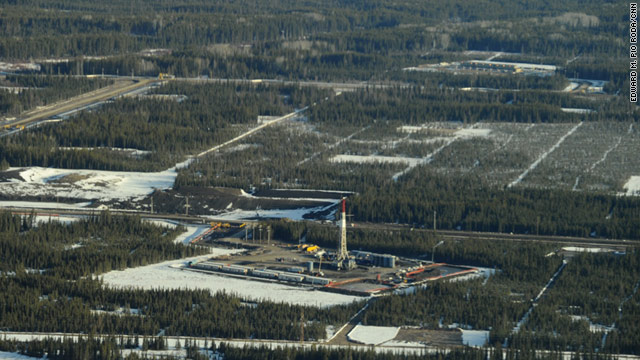
Can tech make a dirty fuel clean? -- This is Drew Zieglgansberger's dirty little secret: a huge metal tube that's filled with a roaring natural-gas flame.

"Here's the big culprit," Zieglgansberger said, yelling over the squeal of the industrial process, which is used to melt oil out of the ground here in northern Canada. "We're burning natural gas to get out something like bitumen (oil). We know that, but I wanted to show you anyway. It's a massive amount of energy we use to create the steam."

This is the oil industry's answer to the traditional process of strip mining Canada's boreal forest to extract "oil sands" from the ground.

Instead of digging for oil, "in situ" oil fields such as this one, about 500 miles north of Canada's border with Montana, send pipes and steam into the ground to slurp the fuel out of the dirt.

The metal tube is large enough "you could get three half-ton trucks in there," said Zieglgansberger, who is Cenovus' senior vice president at Christina Lake. The fire heats water, which winds around inside the tunnel in pipes that look like brain matter. Cenovus injects that steam into the ground to melt a sticky form of crude that's mixed in with the dirt about 1,200 feet below the surface. The heat and water loosen the oil, allowing it to be pumped back to the surface and then refined.


http://i2.cdn.turner.com/cnn/2011/TECH/innovation/04/19/oil.sands.technology/t1larg.in.situ.oil.sands.cnn.jpg
Instead of leveling the forest, "in situ" oil sands developments in Canada's Alberta just cut strips in the land


The huge flame is the "culprit" because all of the energy it takes to power the process makes extracting oil in this way rather inefficient.

But it's also an opportunity: Cenovus and others see this type of operation as an environmentally friendly alternative to oil sands mining. Instead of clearing the forest to dig out this oil-dirt mixture, and leaving ponds of toxic waste on the surface, in-situ developments such as this do their work underground.

The companies do cut strips out of the forest to conduct seismic tests that tell them where the oil is located. They argue this is both aesthetically pleasing and environmentally friendly. Some environmentalists, however, say the strips still pose problems for local wildlife, including migrating caribou.

The oil industry sees this type of operation as its future. By 2015, most of the oil produced from Canada's massive oil sands reserve will be steamed out of the ground instead of mined, Zieglgansberger said. About 80% of all oil sands will be extracted using this method, according to the Canadian Association of Petroleum Producers.

These technological advances could lead to a cleaner manner of oil extraction.

"Technological advancements are what started this industry, and it's what is going to help this industry continue to grow," said Anne Marie Toutant, vice president of mining operations at Suncor, the company that started mining for oil here in 1967.

The mining side of Canada's oil sands is also making an effort to be greener.

Suncor plans to stop building new tailing ponds, which are toxic lakes of industrial waste that have been blamed for killing migratory birds. The company has developed a new polymer that it can inject into these lakes to turn them back into land much more quickly.

"We're now talking about reducing our footprint to about one quarter of what it would have been," said Bradley Wamboldt, general manager for tailings at Suncor. "Viewed from space, that means you see less of an impact."

The company recently opened up a field on the site of a former tailing pond after filling the hole with dirt and then planting native vegetation on top. The Alberta government has certified only 257 acres of land as fully reclaimed -- 0.16% of the total active mining area. About 6,500 acres are at some intermediate stage of the process, according to the province's environment ministry.

Projects such as these, and the promise of in-situ technology, lead Zieglgansberger to believe technology and innovation can make a dirty fuel cleaner.

"I don't want to do something that's going to make my grandkids say they're ashamed of their grandfather," he said.

The industry gets an unfair rap, he said.

"We're not just a bunch of cowboys out here punching holes in the ground so we can hold up our money bags and go, "Arr! Look at us!' " ( cnn.com )


READ MORE - Can tech make a dirty fuel clean?

Asia nuclear reactors face tsunami risk


Asia nuclear reactors face tsunami risk – The skeleton of what will soon be one of the world's biggest nuclear plants is slowly taking shape along China's southeastern coast — right on the doorstep of Hong Kong's bustling metropolis. Three other facilities nearby are up and running or under construction.

Like Japan's Fukushima Dai-ichi plant they lie within a few hundred miles of the type of fault known to unleash the largest tsunami-spawning earthquakes.

Called subduction zones, these happen when one tectonic plate is lodged beneath another. And because the so-called Manila Trench hasn't been the source of a huge quake in at least 440 years, some experts say tremendous stresses are building, increasing the chances of a major rupture.

Should that happen, the four plants in southern China, and a fifth perched on Taiwan's southern tip, could be in the path of a towering wave like the one that struck Fukushima.

"We have to assume they'll be hit," said David Yuen, a University of Minnesota professor who has modeled seismic probabilities for the fault. "Maybe not in the next 10 years, but in 50 or 100 years."

Asia, the world's most seismically charged region, is undergoing a nuclear renaissance as it struggles to harness enough power for its huge populations and booming economies.

But China, Taiwan, India and several other countries frantically building coastal facilities have made little use of new science to determine whether these areas are safe. At least 32 plants in operation or under construction in Asia are at risk of one day being hit by a tsunami, nuclear experts and geologists warn.

And even when nations have conducted appropriate seismic hazard assessments, in many cases they have not shared the findings with the U.N. International Atomic Energy Agency, leaving experts frustrated and in the dark.


This March 11, 2011 photo made available April ...
Ling` ao Nuclear Power Plant, one - This March 11, 2011 photo made available April 16, 2011 shows the Ling'ao Nuclear Power Plant, one of two nuclear stations in Daya Bay, near Shenzhen in southern China. As China, Taiwan, India and others have frantically built coastal nuclear facilities in recent decades, they have made little use of new science to determine whether these areas are safe, and at least 32 plants in operation or under construction in Asia are at risk of one day being hit by a tsunami, nuclear experts and geologists warn


"It's pretty astonishing to a lot of us that so little priority is placed on the work we do," said Kerry Sieh of the Earth Observatory of Singapore, who has studied and written about the Manila Trench, where pressure has been building for millions of years.

He is among those who say it is only a matter of time before it snaps.

___

In assessing the tsunami risks to nuclear power stations, scientists focus on their proximity to subduction faults, volcanoes and areas frequently hit by underwater landslides — all of which can trigger seismic waves. Because giant tsunamis recur, they also look at historic and scientific records, going back up to 4,000 years if possible.

The greatest threat comes from the subduction faults crisscrossing the globe, some far from the minds of policymakers, nuclear industry officials and the public because it has been so long since they exploded.

In places where tectonic plates that form these faults are "coupled," or stuck together, the stresses are the biggest, especially if centuries have passed without a major energy-releasing earthquake.

When the strain eventually forces one plate to pop up or dive under the other, the resulting temblor can spawn mammoth waves like the one that struck off Japan's northeast coast on March 11, triggering the nuclear crisis that has carried on for more than a month.

While there is some "coupling" at the Manila Trench, there is debate about just how much. Scientists say more research needs to be done to determine if pressure is building and along which segments.

A computerized simulation by Yuen's students shows a magnitude-9.0 quake along the Manila Trench sending waves racing along the South China Sea, before slamming Taiwan's southern shore 15 minutes later. The tsunami reaches China's southeast coast in around two hours. It also strikes Hong Kong, which sits just 30 miles from the nearest nuclear plant — close enough to see increased radiation levels if a plant were to be damaged by a Fukushima-like event.

Scientists paint a worst-case scenario in which waves 15 to 24 feet high (5 to 8 meters) could strike the plants in China and Taiwan.

___

Science has come a long way since the first nuclear plant was built in the 1950s.

By carbon dating the ash, pollen or other organic material attached to tsunami sand deposits swept inland with the giant walls of water, geologists can determine to the decade, and sometimes even the year, when the wave hit and how big it was when it roared ashore.

That's important because some tsunamis only strike once a millennium.

"This is the smoking gun, the calling card of the tsunami, and when you find it, especially far inland, you know that this is an area that has been hit with a large tsunami in the past," said Bruce Jaffe, an oceanographer and tsunami expert at the U.S. Geological Survey.

Such research is considered essential in deciding where to locate nuclear power stations because most are built along seashores, rivers and lakes to supply the massive amounts of water needed to keep their reactors from overheating. Even plants perched on hills or cliffs may be in danger because the pipes used to carry up water used for cooling could be damaged in a powerful tsunami.

Japan, which sits atop three highly active tectonic plates with 54 reactors dotting its coastlines, has probably done the most when it comes to looking back in history.

Even so, Tokyo Electric Power Co., which runs the hobbled Fukushima plant, did not factor geologic evidence of the giant Jogan tsunami of 869 A.D. into its preparedness. When the tsunami hit last month, it unleashed waves up to 42 feet (14 meters) high, swamping the backup generators needed for cooling.

The same region was also walloped twice before, once around 140 B.C. and again sometime between 600 B.C. and 900 B.C., scientific studies revealed.

Experts hope Japan has taught the world an important lesson: When it comes to nuclear safety, it's essential to imagine the unimaginable. Looking back 50 years, or even 500, is not enough.

"When you're talking about radioactivity and possibilities of explosions ... you have to look at what is within the realm of possibility," said Jody Bourgeois, a tsunami expert at the University of Washington who was doing research in Japan when the disaster struck. "You should be building it with factors of safety for the maximum possible events."

It's not the first time a tsunami has threatened nuclear reactors.

The 2004 earthquake off Indonesia's subduction fault spawned the monster tsunami that killed 230,000 people in a dozen nations.

It also sent waves slamming into a nuclear plant in the southern Indian township of Kalpakkam, the country's center of atomic research, nearly a thousand miles from the quake's epicenter.

Though the reactors automatically shut down and no radioactive material was released, it showed that even facilities far from dangerous faults need to prepare for the worst.

While the near miss in India raised awareness, it did not prompt major changes to the safety design at the Madras Atomic Power Station, said its director, K. Ramamurthy. Last week, however, a top government official said India would revamp the safety features at all its nuclear plants to try to prevent a Japan-style crisis.

The Madras plant is among the scores that have yet to ask the IAEA for an independent review to determine if their tsunami preparedness assessments meet international standards.

The same holds for Pakistan, which built a plant along a coastline near Karachi that was hit by a tsunami in 1945, as well as for China, Taiwan and the U.S.

Though the reports aren't mandatory, Antonio Godoy, the IAEA's recently retired top seismic safety expert, said many countries have held up efforts to build a comprehensive database identifying the plants vulnerable to tsunamis based on such reviews.

The Fukushima crisis does seem to have jolted some governments into action.

Tsunami expert Tso-Ren Wu of Taiwan's National Central University, warns that "we are long overdue" for a similar quake on the Manila Trench. He was recently commissioned by Taiwan to model worst-case scenarios for all three of the island's nuclear plants and a fourth under construction. His findings will be used to help redesign the facilities or raise their seawalls, if necessary.

His studies indicate two plates that form the subduction zone are pushing against each other at a relatively fast 8.7 centimeters (3.4 inches) per year, forcing extreme amounts of energy to build up. A fault slip from the two plates would be up to 38 meters, comparable to what occurred during the 1960 magnitude-9.5 Chile earthquake, the largest on record. By comparison, the slips in Indonesia and Japan were estimated at around 20 meters. The greater the slip, the more water is heaved up to create bigger tsunami waves.

It's not yet clear, however, if the Japan disaster was a wake-up call for energy-starved China, which has the world's most ambitious nuclear power expansion.

China's nuclear regulators declined to answer questions submitted by The Associated Press, but have said in the past that plants along their southeastern coast have been fitted with the most modern technology and are able to withstand huge storm surges from typhoons, which hit with far less force than tsunamis.

As for the likelihood of a mammoth tsunami, Li Zhong-Cheng of the National Energy Center told the state-run China Daily newspaper after last month's disaster that coastal areas are protected by a wide, shallow continental shelf that is not conducive to the formation of big seismically triggered waves.

Other scientists say there isn't enough research to make such a declaration.

Some historical records, though inconsistent, indicate a 30-foot (10-meter) tsunami in 1782 from the South China Sea killed as many as 40,000 people after hitting southern Taiwan. Records also point to a 27-foot wave in 1765 that swept as many as 10,000 people out to sea in the same province where the Chinese plants are located.

But experts say China needs to look much further back in time.

Unlike Japan, sand deposit studies have just begun there and have not yet yielded evidence of ancient tsunamis. More research is needed along the coast and in the Philippines — which would have been within reach of the same waves.

If that data, along with predictions about future earthquake-spawned tsunamis are not taken into account, some fear disaster could strike again some day.

Plants in the Mediterranean and along the Atlantic and Persian Gulf also need to be prepared.

The only candidate for a large tsunami in the continental U.S. is the Cascadian subduction zone, more than 200 miles off the West coast. Experts say neither the Diablo Canyon nor San Onofre stations in California are considered in the path of destruction, though they may still be vulnerable to local tsunamis generated by other faults or submarine landslides. Both have recently promised to carry out more advanced seismic testing to guarantee safety.

"What happened in Japan was not a surprise," said Godoy, who remains an IAEA consultant and has spent much of the past 20 years warning governments to prepare for worst-case scenarios. "Maybe now they'll wake up, listen and act." ( Associated Press )


READ MORE - Asia nuclear reactors face tsunami risk

Japan nuke plants starts pumping radioactive water


Japan nuke plants starts pumping radioactive water – The operator of Japan's crippled nuclear plant began pumping highly radioactive water Tuesday from the basement of one of its buildings to a makeshift storage area in a crucial step toward easing the nuclear crisis.

Removing the 25,000 tons of contaminated water that has collected in the basement of a turbine building at Unit 2 of the Fukushima Dai-ichi plant will help allow access for workers trying to restore vital cooling systems that were knocked out in the March 11 tsunami.

It is but one of many steps in a lengthy process to resolve the crisis. Tokyo Electric Power Co. projected in a road map released over the weekend that it would take up to nine months to reach a cold shutdown of the plant. But government officials acknowledge that setbacks could slow the timeline.

The water will be removed in stages, with the first third of it to be handled over the coming 20 days, said Hidehiko Nishiyama of Japan's Nuclear and Industrial Safety Agency. In all, there are 70,000 tons of contaminated water to be removed from the plant's reactor and turbine buildings and nearby trenches, and the entire process could take months.


A Japanese man salvages materials  in an area ...
Japanese man salvages materials - A Japanese man salvages materials in an area devastated by the March 11 earthquake and tsunami in the port town of Kesennuma, Iwate prefecture, Japan, Monday, April 18, 2011


TEPCO is bringing the water to a storage building that was flooded during the tsunami with lightly contaminated water that was later pumped into the ocean to make room for the highly contaminated water.


Once the contaminated water in the plant buildings is safely removed and radioactivity levels decline, workers can begin repairing the cooling systems for the reactors of Units 1, 2 and 3, which were in operation at the time of the tsunami. Workers must also restore cooling functions at the plant's six spent fuel pools and a joint pool for all six units.

When the tsunami struck, units 5 and 6 were in cold shutdown, which is when a reactor's core is stable at temperatures below 100 Celsius.

With the nuclear crisis dragging on, public frustration with the government is growing. Opinion polls show more than two-thirds of Japanese are unhappy with the leadership of Prime Minister Naoto Kan, who was grilled for hours Monday by opposition politicians, many demanding he resign.

TEPCO has offered residents forced to evacuate from homes around the plant about $12,000 per household as interim compensation. People elsewhere in the disaster zone who lost houses to the tsunami — which also left more than 27,000 dead or missing — say help has been slow to materialize.

"I don't understand what the politicians are doing, there are new committees and meetings everyday," said Hiroshi Sato, who lost his house in Kesennuma and now lives in a fabric warehouse from his old business.

"We need support, financial assistance, and nothing has come yet," he said.

In TEPCO's blueprint for stabilizing the reactors, the utility aims to cool the reactors and spent fuel pools and reduce radiation leaks over the next three months. Within 6-9 months, the goal is achieve a cold shutdown of the reactors and cover the buildings, possibly with a form of industrial cloth, to further tamp deter any possible radiation leaks.

Two remote-controlled robots sent into the reactor buildings of Unit 1 and Unit 3 on Sunday showed that radiation levels inside — up to 57 millisieverts per hour — were still too high for humans to realistically enter.

The U.S.-made Packbots, which resemble drafting lamps on tank-like treads, also were briefly sent into Unit 2 on Monday, officials said, and the radiation level was found to be a much lower 4.1 millisieverts per hour.

But the high level of humidity inside the reactor building fogged up the robot's camera lens, making it difficult to see conditions inside. They were pulled out after less than an hour, officials said.

"We didn't want to lose sight of where the robot was and then not be able to retrieve it," TEPCO manager Hikaru Kuroda said.

The reason for the higher humidity wasn't clear, but it suggests that workers — if they were to go inside — also would have difficulty seeing through their masks, Kuroda said. (Associated Press )


READ MORE - Japan nuke plants starts pumping radioactive water