There is one rule for the industrialist and that is: Make the best quality of goods possible at the lowest cost possible, paying the highest wages possible

Showing posts with label Energy. Show all posts

French election irrelevant in poor suburbs


French election irrelevant in poor suburbs - Walking through Les Bosquets market in Clichy-sous-Bois, it is easy to forget that you are in a suburb of Paris - or indeed in France itself.

With its array of exotic foods and Arab music, the market looks and sounds like a vibrant North African souk.

Next month's French presidential vote might also be a world away. "We haven't seen anyone campaigning here," says Rabbah, who sells CDs.

People are aware of an election but they follow it from afar, "as if it was another country", says local social worker Laurence Ribeaucourt.


http://news.bbcimg.co.uk/media/images/59160000/jpg/_59160834_clichy007.jpg
Nasty, brutish and tall: condemned buildings are still standing in Clichy


The sense of marginalisation is deeply rooted. Clichy is one of France's most notorious "banlieues" (suburbs), as the largely immigrant ghettos that ring the country's cities are euphemistically called.

In October 2005 the deaths of two Clichy teenagers sparked three weeks of looting and car-burning in housing estates across France. More than six years on, residents feel as neglected as ever.

"I can't hear anyone talking about our problems," says Birama Fofana, a 38-year-old West African sipping a drink in Clichy's dilapidated but popular shopping centre.

During the 2007 presidential election - when memories of the riots were still fresh - "everyone was talking about the banlieues", Mr Fofana remembers. "Now no-one does. We have been forgotten."

Wrong side of the track

Some believe the riots have made the situation worse.

According to Diabe Sy, another immigrant, the town has become such a byword for mindless violence that locals have little hope of finding a job. "If you come from Clichy, employers believe you are a criminal," he says.

Discrimination has been recognised as a major challenge for banlieues - where youth unemployment typically tops 40%.

In 2008, President Nicolas Sarkozy expressed anger that success in the country was dependent not on merit but "largely on your social origin, the neighbourhood where you live, your name or the colour of your skin".

During Mr Sarkozy's five-year term, however, little has improved. Job discrimination, Ms Ribeaucourt says, remains "enormous".

She cites the case of a student for whom she had found work experience in a bakery. When he turned up and the owner saw he was black, he was shown the door.

Besides discrimination, banlieue residents are held back by a range of social issues - poverty, drugs, family breakdown - that show no sign of easing.

Lack of transport links means it can takes up to two hours to reach Paris - which is only 16km (10 miles) away. Many feel trapped as a result.

"It's a bit like before [the riots in] 2005," Ms Ribeaucourt says. "The problems are so massive that a small spark can be enough to set things off."

Plus ca change

To be fair, the area has not been completely neglected by the state under the Sarkozy presidency.

A 380bn euro (£320bn; $500bn) urban renewal plan is under way in the housing projects straddling Clichy and neighbouring Montfermeil. Colourful low-rise buildings have sprung up to replace the grim towers built in the 1960s.

And, in January, Interior Minister Claude Gueant opened a new police station for Clichy-Montfermeil - a long-time demand from residents in a high-crime area where police had rarely dared or bothered to venture.

But these improvements seem unlikely to make a big difference. Oddly, many of the old towers are still standing empty beside the shiny new buildings.

The new police station, a fortress protected by riot-proof steel walls, adds to the surreal feel of Clichy-Montfermeil.

"The appearance may be changing, but the problems remain the same," says Jean-Pierre Marchand, a trader on the market.

Take the case of Linda, a 25-year-old Algerian immigrant. She now lives in a new building. The lift works, a welcome change from the decrepit block her family lived in 18 months ago.

But the flat is expensive and small for Linda's family - her parents, her husband, their seven-month-old baby, her sister and teenage niece. All live on her father's disability benefits.

She cannot get a job because she has no working papers. Neither can her husband, Mohammed, whose temporary residency is about to run out. Their baby son, although born in France, has been denied citizenship.

"For all of us, papers are a big problem," Mohammed says. He also unimpressed by the increased security. Young men like him, he says, are more likely to be stopped by overzealous police.

Both are hostile to President Sarkozy, a conservative who has sounded increasingly tough on immigration.

"Sarkozy does not like us," Linda says. "He is for rich people, not for the poor. Despite his promises, he hasn't changed a thing. He only made things worse."
The beef with Islam

Such feelings are widespread in the banlieues, where Mr Sarkozy's pledge as interior minister in 2005 to cleanse housing estates "with a Karcher pressure hose" still rankles.

But neither is there much enthusiasm for the main centre-left candidate, Francois Hollande.

Ahmed Hadef, a youth worker and town councillor in Montfermeil, points out that the socialist-dominated Senate has recently passed a bill that would outlaw religious signs, including the Islamic scarf, from day-care centres and even at childminders' homes, that receive state funds.

http://news.bbcimg.co.uk/media/images/59160000/jpg/_59160385_france138.jpg
Clichy-Montfermeil's new police station is a riot-proof bunker

Mr Hadef says he may vote for marginal Eurosceptic candidate Nicolas Dupont d'Aignan "because he is the only one who does not attack Islam".

Muslim-related issues have been prominent in the campaign. There have been allegations over the allegedly widespread use of unlabelled halal meat.

This has angered many Muslims. Amar Brahmi, who heads Montfermeil's Muslim Cultural Association, argues that religion should be left out of politics, especially in a secular country like France.

Sitting in his mosque, he insists that Muslims are French citizens too and that the halal issue is being bandied about "to marginalise a section of the nation to get votes".

Fears of Muslim communalism, however, are not confined to opportunistic politicians. Last October a report by Islam expert Gilles Keppel - whose team spent a year in Clichy and Montfermeil - noted an "intensification of Muslim identity" in suburbs and growing disengagement from a wider French society that neglects them.

The report was controversial, but the mutual indifference between the presidential candidates and Clichy residents appears to bear out some of its conclusions.

As Ms Ribeaucourt - who has spent two decades in the area - puts it: "This is a world apart." ( bbc.co.uk )

2005 French riots

Rioting in French suburb, October 2005
  • Sparked by death of two Clichy youths in October 2005
  • Unrest spreads to banlieues suburbs across France
  • 21 nights of rioting
  • 9193 cars burnt
  • 2,921 arrests

READ MORE - French election irrelevant in poor suburbs

Japan wants businessmen to shed suits, save energy


Japan wants businessmen to shed suits, save energy – The Japanese government wants the country's suit-loving salarymen to be bold this summer. Ditch the stuffy jacket and tie. And for the good of a country facing a power crunch, go light and casual.

Japan's "Super Cool Biz" campaign kicked off Wednesday with a government-sponsored fashion show featuring outfits appropriate for the office yet cool enough to endure the sweltering heat.

This summer may be especially brutal. The loss of the Fukushima Dai-ichi nuclear power plant, which was crippled by the March 11 tsunami, means electricity could be in short supply around the nation's capital, Tokyo, during especially hot days.

To prevent blackouts, the government is asking companies and government offices to cut electricity usage by 15 percent. It wants companies to limit air conditioning and set room temperatures at a warm 28 degrees Celsius (82 degrees Fahrenheit).


Yuriko Koike, Tetsuo Saito,Sakihito Ozawa, Ryu ...
Environment Minister Ryu Matsumoto - Environment Minister Ryu Matsumoto, right, poses with his predecessors, from left, Yuriko Koike, Tetsuo Saito and Sakihito Ozawa, donned 'Kariyushi' shirts, Japan's southernmost prefecture of Okinawa's version of the Aloha shirts, during a 'Super Cool Biz' fashion show Wednesday, June 1, 2011. Japan's 'Super Cool Biz' campaign kicked off with the government-sponsored event featuring outfits appropriate for the office yet cool enough to endure the sweltering heat


The idea isn't new. "Cool Biz" was introduced in 2005 by the environment minister at the time, Yuriko Koike. The campaign was part of efforts to fight global warming.

But with Japan dealing with an ongoing nuclear crisis and the aftermath of a magnitude-9.0 earthquake and tsunami, officials decided they needed to take Cool Biz one step further this year.

"When we started Cool Biz in 2005, people said it was undignified and sloppy," Koike said at the fashion show held at a Tokyo department store. "But this is now the sixth year, and people have grown accustomed to it."

Surveys by the Cabinet Office indicate that companies are gradually jumping on board. In a 2009 nationwide poll, 57 percent of about 2,000 respondents reported that Cool Biz had been implemented in their workplaces. The figure stood at 47 percent two years earlier and at less than a third in 2005.

So what's different with Super Cool Biz?

First, the dress code. Polo shirts, Aloha shirts and sneakers are acceptable now under the environment ministry's relaxed guidelines. Jeans and sandals are OK too under certain circumstances.

Men might even think of carrying a fan or trying a pair of tight pedal pushers like one model wore, though whether such fashion extremes would actually catch on is another matter.

Notably missing from the environment ministry's dress code are specific rules for women. Despite the omission, Wednesday's fashion show included ensembles for women as well.

Khakis, white pants and airy polyester dresses are all apparently acceptable.

For retailers selling casual clothes, Super Cool Biz could provide a much-needed boost after the disaster, which led consumers to cut back on spending. Chains like Fast Retailing's Uniqlo have stockpiled polo shirts and chinos in anticipation of strong demand.

Officials also hope to spur energy-saving creativity with the campaign, both in and out of the office. To deal with the heat, the ministry suggests using gel sheets or consuming foods that cool the body. It also encourages employees to limit overtime hours, consider working from home when appropriate and take two weeks of summer vacation.

"This is not just a temporary measure to survive this summer," said Ryu Matsumoto, the current environment minister who joined Koike and two other predecessors at the event. "This is going to be a big event to change the way of life in Japan and people's lifestyles."

Japan's tropical southern islands of Okinawa may offer some inspiration.

On the catwalk, models donned "Kariyushi" shirts, Okinawa's version of the Aloha shirt. Worn untucked, they are light and feature colorful prints of traditional island designs.

Kariyushi shirts are commonly worn by Okinawans in the summer, even in formal settings like business and political meetings. In 2000, the Kariyushi shirt jumped onto the global stage when heads of state, including former President Bill Clinton, wore them during the Group of Eight summit in Okinawa.

For society to truly embrace the Kariyushi shirt and Super Cool Biz, leadership must come from the top, said Keiichi Inamine, a former governor of Okinawa who attended the fashion show.

"It's important for people with standing in society to wear it," he said, referring to the hierarchical nature of Japanese society.

The country's leaders, however, may have had other things on their minds Wednesday.

Prime Minister Naoto Kan wore a traditional dark suit in parliament as he faced fire from opposition lawmakers calling for his resignation. Opposition leader Sadakazu Tanigaki also wore a suit, though to be fair, it was an unusually chilly day for June. ( Associated Press )


READ MORE - Japan wants businessmen to shed suits, save energy

Biggest Source of Gas Emission in Jakarta


Biggest Source of Gas Emission in Jakarta -- Environment Minister Gusti Muhammad Hatta said transportation is the biggest source of greenhouse gas emission in Jakarta.

"Around 47 percent of greenhouse gas emission in Jakarta is contributed by transportation and 40 percent by industry," Minister Gusti Muhammad said when visiting expo stands at the Indonesian Environment Week 2011 here Wednesday.

Based on the Indonesian environment index 2010 on the environmental condition in 2009, Jakarta was at the lowest rank because of its poor water and air quality and lack of green areas. Among solutions offered to address the problems are a cut in the number of motor vehicles and development of mass transportation means.


http://t1.gstatic.com/images?q=tbn:ANd9GcRWP_LoYL5ieX-igllaS5a6XGxHgMAqjPk0E_4htZqN8M_s9sEdCg


"But it’s not easy and it must be carried out in stages," the environment minister said.

The Jakarta government plans to build more busway special lines and for that purpose, around 1,500 trees will be cut. The environment minister said any development will have positive and negative impacts, but the negative impact should be minimized.

Meanwhile, the United Nations Environment Program (UNEP) has annoucned that this year’s theme of the World Environment Day 2011 is "Forests: Nature at Your Service", to celebrate the multitude of services - providing clean air, housing rich biodiversity, supplying water - performed by the world’s forests.

The World Environment Day 2011 will be hosted for the first time in India to highlight all about positive action for the environment. Beyond supporting the natural habitat, forests sustain economic growth. In 2004 trade in forest products was estimated at $327 billion.

Continued and uncontrolled deforestation therefore not only has devastating consequences for the environment, the wildlife and communities, but for economies around the world.

Rather shockingly, 36 million acres of natural forest are lost each year. World Environment Day (WED) chose this year's theme, "Forests: Nature at Your Service", to encourage forest conservation and sustainable consumption for green growth, and in support of the UN International Year of Forests initiative.( antara )


READ MORE - Biggest Source of Gas Emission in Jakarta

Bolivia at risk of megaquake


Bolivia at risk of megaquake – Some two million people in Bolivia face the risk of a magnitude 8.9 megaquake, 125 times stronger than the previously calculated potential maximum, according a study published Sunday.

The findings, reported in Nature Geoscience, came as a surprise, the researchers said.

"No one suspected that the previous estimates were too low," said Benjamin Brooks, a geophysicist at the University of Hawaii Manoa and lead author of the study.

Earlier calculations had set the most powerful expected earthquake for the region east of the central Andes mountains at magnitude 7.5, based in part on a relatively quiet seismic history.

But a careful analysis of Global Positioning System (GPS) data from the eastern flank of the mountain chain showed a buildup of stress consistent with a maximum magnitude of 8.7 to 8.9, Brooks said.


Bolivia at risk of megaquake: study
Two million people in Bolivia face risk - Some two million people in Bolivia face the risk of a magnitude 8.9 megaquake, 125 times stronger than the previously calculated potential maximum, according a study published Sunday


Tracking tiny changes in the location of GPS stations enables scientists to measure surface velocity to within a fraction of a millimeter per year.

The data showed that the area to the west of the Mandeyapecua thrust fault, which runs north-south, has moved far more than the area east of the fault, pointing to a dangerous accumulation of pressure.

A shallow section of the fault is locked in place over a length of about 100 kilometres (60 miles), the researchers found.

"Rupture of the entire locked section by one earthquake could result in shaking of magnitudes up to 8.9," Brooks said in a statement.

There is no way to know when such a quake might happen -- or if it will happen at all, he added.

A series of smaller temblors could release stress without unleashing a Big One.

To follow up, Brooks is probing the ancient seismic history of the region to determine the dates and sizes of past earthquakes, and to find out if one that size has ever occurred there.

"We hope that this information will be widely disseminated and considered in Bolivia by the people -- including the general population, engineers, planners, policy-makers -- who may be most affected," he said.

Several major earthquakes in recent years -- including the magnitude 9.0 monster off the coast of Japan in March, and an 8.8 quake in Chile in February 2010 -- have prompted some experts to reassess earlier forecasts.

"We probably should re-evaluate our estimates of the maximum sizes of earthquakes that could strike all fault areas," Ross Stein, a seismologist at the US Geological Survey (USGS), said shortly after the Japan quake. ( Agence France Presse )


READ MORE - Bolivia at risk of megaquake

Tornado Emergency Scenarios


Tornado Emergency Scenarios - Everyone knows tornadoes are devastating wind storms that take the lives of several people each year in the U.S. Most people are able to hear the emergency broadcast through their television or radio prior to a tornado reaching their location. What happens if you are caught off guard and a twister quickly approaches? Here are some tornado emergency scenarios and what to do if you find yourself in the path of a deadly oncoming tornado.

Backcountry Camping -- When you take a trek out into the backcountry, your goal is to get away from man-made structures and bond with nature. If you find yourself faced with severe weather - especially a tornado, it can be challenging to find a safe zone when in the wilderness or open plains. Even if you are far away from buildings that contain cut wood and metal, a country tornado can still inflict damage and carry debris - including rocks, trees and dirt. Always look for the lowest possible ground area to take shelter; this includes ditches, culverts and river banks. You can also take cover in caves or along one side of a large boulder or rock. When you find the lowest possible location, be sure to lie flat on your stomach and cover your hands over your head for protection.

Night-time tornadoes -- One of the scariest and most deadly times a tornado can strike is after dark. This could be a time when you are fast asleep - unaware there is tornado headed your way. If you find yourself awakened to a tornado that is just a few feet away and you are unable to get to the safety of your basement - lay flat on the floor and cover yourself with pillows, blankets and sheets to protect yourself from glass and flying debris. Try to get under your bed or another solid surface if possible.


data:image/jpg;base64,/9j/4AAQSkZJRgABAQAAAQABAAD/2wBDAAkGBwgHBgkIBwgKCgkLDRYPDQwMDRsUFRAWIB0iIiAdHx8kKDQsJCYxJx8fLT0tMTU3Ojo6Iys/RD84QzQ5Ojf/2wBDAQoKCg0MDRoPDxo3JR8lNzc3Nzc3Nzc3Nzc3Nzc3Nzc3Nzc3Nzc3Nzc3Nzc3Nzc3Nzc3Nzc3Nzc3Nzc3Nzc3Nzf/wAARCACWAK4DASIAAhEBAxEB/8QAGwAAAgIDAQAAAAAAAAAAAAAAAwQBAgAFBgf/xAA2EAACAgEDAgQEBQQCAQUAAAABAgADEQQhMQUSBiJBURNhcYEykaHB0RQjQrEH8OEVUmKC8f/EABoBAAIDAQEAAAAAAAAAAAAAAAECAAMEBQb/xAAjEQACAgMAAgEFAQAAAAAAAAAAAQIRAwQSITETFCIyUXFB/9oADAMBAAIRAxEAPwDhTJEmYBPTo84SohVEoohFBzGFbLDnENV5tsyiJGFAA9JCssoPqc+0nt3mZkqcwNgMAlwN5iiSSPpBZCTgD1lSZBb1kdwMAUiMZkEe8tkCVJkGBsMbwLnJhLW22BgOTmMgGYlWU+o5jiaVmTuVl+0j4bklSuWiuSGSEiPWQVzHxp2x+EgfPmVfTHP4YvSGpmudYFl9ps20rkcbSh0mD5jJ2hlaFFG0sBJUbywEdCslZccyoEIBGEYRYTugl2MujY+f1gFLg5OMwyrj0gk3YZAEYIxxvFbDRgO0ox3mEE7SvaR6yAopYcJtKL3YzvDhBjeZ2gCGxgBc59ZHfk4P2jDUntBIwCMg+8A6FTjHrzAmiOwTHukou42z8oXsGMy1SFmAUEknbEkmkgpWzcafp7FFNdR3G+BGl6Xcwz8Jj9p2XSn+P07TW3DtsapS3lxvj/p+8eFaek5M9mSZ1oacWrs8+PSNSOKWz9DJ/wDRNWRvXO9alSeBKmkD0ET6qQ/0UDz+7ouqGwqP5xezo+pB/AfsJ6FZUM/hETtoHdwIVtSA9KJ5IvMuol0r2l/h4nWTOSVVRCAATAhh6dO9hCohZvQCFyoFWBABMuEGdpttJ0HU3qXVMkAntHP5TfdH8NVXrb/UpYHAwpJx98SqWxCPtlsdecnSRyiJgbj744kqayT5xn2zO+o6LRpamTIZq8kALgk/M/Sc74q6SlJr1enXsWwEMChwD78YGcSuGxGcqLZasoRtmlZFXBV0JI/DneAfPp+UGMq2xGR6ek2v9Njp9OpyxewkjbYCX3z7MyjZr61OcE4z+kZu0rIVHa3G2Rjb0mdy96ZQNg7g+s6ykdP13Tz/AE9YF9KjPeR5h6/v+cryZOSzFi7vyaXo/TrNY6hwFoVh3knHd8s/95hes+H79KHupq/tAeZc5Kn951nhpKHr+J5AoyAoPH2zn0/SbvUVVkq2FyPaYZ7MozN8NSEsfn2eVp0d7j21Bs4BwVIP+pu+j+FdZptbTqNQqBU83b3foZ3Cn9JPdvvxEntzfgsx6eOLtivwsBVwAAMADgSSuI12qeNpVqjypmRs2ULlsTA49TiWasjfECwguyeibO33BzFrQudjmRYSpOIu9hzDQLPMEQkk42HpDGsLjPrNvRoFqBZ1DNgnH0iV1BWwgg4B23nbU0zhSg0LIgLAHgmdr4Z6bp0K21WFz2/i22+WJya0p8QAkhRzOp6BcEbtqYlOMA4/SVbDfPgt1qUvJ1CYSxjaT5jkZXAUflGwqqNthtxFK7FcBgxjC2TmuzrIsKwDnG/+5rfEWnS/omrRgPw9249vWbIuJpPGGq+B0K8f5WeUfzGx32hMtcOzy71ONxzj3nonQdAmr6BpksUgjJV2AJGSePaedjc4GMngEZnrvSaV0vTdNSoAKVjOPfE6G3KoqjnacVKTs0vUPDOmKM2nYi0nJ323miOh6hpUcdjIn4Se7tJH2nfmtVIIAIH6SrpSz5atCceomWOxJeH5Nc9aL8rwcT0bRXPcXSxarAQQCed+Z3GlsdlC2Esc8wIqQv3hRnj7RupCCuJVlydOyzDj4VWFVZPbCqm0ntmbo1UBkZMIwxBnmAJjNnmL2BTxLucRZ35kQAN6n03iVg39Y49uDF7bwygZwQeY1imr6tprK2K11efg+U7TndTpbMHuyW+k9mOm09h7nqrY+5GYq/RtE7FjSh9cHiWYt1RXlFOXT79M8XKMPQxnQO41KdjFTnkT07qXh7S3YKV1KByMTX3eGdIig1Ao43yBNa3ISRlelOL9gtE1wrX4jZxjPlAzHg8DptL8DkEn3EbVRngTPJqzVGLRQP8AacZ4916u1OjRz5Mu+Dtk8Tqet9Sq6VoLNS4DMNkT1ZvaeW3WXa/Vs7dz23Nk+p3PH2mrVx2+36Rl2slLhe2PeGunnqPU6gRmqtg7n5DienhiRkA4PtNf4a6YnSenqmB8awd1jY9fablbMD0lWxl7kW6+LiP9F8Of8TiUCkcjEdDgzCofGRmZ7NPItWmTGq1OcekkVkcgD6Q1a/KVykNGJZcLLEriSUzzBWYXiVltEWDG8WdsQj3DiL2ODCgMo7Rewy7neL2HaMIAvbJithHqYe0xSx8HmOhWdyLtpIuiPxPnMDnPMp4H6H/iZ5gLcMPeB+LtzIFmfWMo0ByB2J9oFgwjJYHmDYAy1MRnnHjzV2WdSXTFv7VaAhR7nmO+B+kVlD1G+sEk4qB/UzU+N1Zev3FhyAR9J2XhlQOhaQqNjXn9Z0Jy5wKjnY49Z3f+G27pIaUJmCYjeGVoZGi6cwyjERjoZV87GHrwYiGwYRbe31lMkWRHzxEtU2M4O8w6jbmKanUrvzFUXYzaBGw75xAvZ7QbWjEA9nzlyRU2Ee3fmDaz3gHffmCaz5xqB0FsbPETtIz/ABJe3B5ir24POIVERyOtFmRLCyJpZLh4tDWNB5IeLd8sGhogctmZ3esEGk53hBZw/wDyJQRrNNqOO9Cp+RE23gbUi/ovwcjNFhX7HcQnjPR/1fRbHUZeg/EH7/pOd8Ba34PULNKx8ty+X6ibPzwfwxfhsf078iSBmQN5dRgzHZuSJUYlw2JXO31lXbAiPyMixfeUeyBLwT2yUGwz2H0MXvtJGCfrINmYpfb5oyiK5FnfHH5QLWQb2xd7faOolbkGeyBez2gXtgXtjKIjkEssir2jO+PvK2WxSy3zbRuStyO0R9uYQN84ojQgaUGkZDS4aLB5dX2kCMhpbuxvF+/EB1LWDSaSy0gED0zIR0vI07raHrIDIfK30M836Oj6bxNVUhINd+NvYHH+pt28T6eutiqszcjzcn2M1HR7hZ1n+u1VioAxsO/JM2YftjKzFmkpSjR6mABLZxNJT4g0VpKJcC2M8zY0asW1K+28wu0bk0xliMQLvzK2W7cxWy7GZIhJss3MXezfmDsu+cWsv32liRW5DFl3aM5ill3ceYG+7uOFJ4i5cj0P1liRW5h2t9MwTWY9YB7YpqNZVTj4tqJk48zAR0ipyG3s+cXst+cUXW03dwpuSwrswRwSPrBvdkZzCkJ0Ftt3iz2ZPrBvbmAawZ3MNCuR3TazT1WrXbciOylgGONgQDufmwlberaCg1izWUA2Ota4cNknjOOBtydp4iO0nc5/+o/mXUJg7P8AZR/MxGt5T1vqXjDpnTtSKGay49ncz0AOq8YHPJz+kT6Z/wAg9P1WrTT6jSanSl3CixyGUZ2Bbgj09DPNBjhVsIHI2/iWFvbkBbdz/wC//wAQ2L8rPRb/APkPS1a5qKtBqLKVftNyuBkA7sowc/LcfUS3UPGfRddoLK3/AK6tzgBBp8nfk842+s88DZJDI+3/AMz/ABLg9x8qE9vOWOP9Q2K8rfhm1sv0zWsumssdOQz1lc/nLKXbOLEX081gX/ZmqDAnPa59ec/995Ocrjtfn0I/eOsrKaVnSdO09TXd2r6lpq613KjULk/kZ2Sdc6ZptOR/X6fFa5KrYGPHAxyflPKe4e92Pfy/xJDKygg27jnuQftEcrLYT49Hq+n8SdN1dZsq1tSqrFf7rBCcHGcNjYyX6tpCQBq9OSxwB8Zd/wBZ5QRWGz22/awfL2EhmVgB2Nj2Nn/iRSoPys9Eq8R9O1mpbTafU9zjOD2EK2OcMdjLv1CgE51FW3ObAP3nm7W1hgr92CcYFmcmQL9McgBmA9zGWShXJs9DXqWkJIGppLewsX+YvrOraSmgmzVVDIIGLBk/TecG2orOwRj98ynfWTvWR7Y2jfKKRd1zWV2OlGodk72KuM53+vA34+QMT1etv1bLZfZmzHJJHHH7/wDTDt8Ek/2j9yP4lGVF7cVHb5r/ABE7LFKP6K9Pa+x2NOoWg4JLtYQW9hmUbWaqoItVzVooKoUYqDvzL9wXfsbAA/yH8SjLkAEA+voZOvAykbDUdc1dK1ZehyRhu09242yfrz/+xe3xDqzazVpWEJ8oZc4H5xMomOFHyxKGtAMhV+pkc5fsiUP0GCAb5Mkgd3+X5zJkqELKD3N3E+Ub7k5ll7cHIOx9DMmQMLLDsZlVAcn3hUpOWyBgHtPm9fymTIBGYRWhQFMsxGMbY4/ciXKp3gfDxklfxcY+0yZJbAWdURgBWe9iAPPt99pjBVK/2lyefMTj5CZMkJSLKiliQDs/GduJZkUDJqXA58xmTJAMoFqdcisY4GeZUrWEPYpDb4PEyZIEphe8g92Dud5DBCcBd/mZkyQNAyKl/wACT674gkHY/c24PA9pkyEZGFq2GApz85VgM7YAxMmSBKsd9htKE+4BmTIthR//2Q==


On the Road -- If you are traveling down the interstate and spot a tornado very close by - don't try to outrun it. Look around. If there is a ditch on the side of the road, go to it and lie down flat. Try to avoid being close to your vehicle because the vehicle could roll on top of you. If there is no time and no ditch - stay in your car, get down below the level of the glass, protect your head and cover your face with clothing to avoid injuries. Avoid taking shelter in an overpass under a freeway - the air pressure could suck you out from underneath.

In an Elevated Structure -- Being at the top of a 50 story building when a tornado touches down nearby is a dangerous place to be. If there is not enough time to get downstairs, take shelter away from the windows - preferably in the center of the building or in the stairwell against the wall with your arms over your head. Do not use the elevator.

Seeking shelter in your basement or root cellar is the safest place in the event of a tornado. If you are unable to make it to an underground location, stick to the center of the building in the room with four surrounding walls. A bathroom shower will also suffice. If you have a very small child or infant, place them underneath you as much as possible to protect them from fallen debris. Always remember to avoid being a standing target for debris. Lying down and protecting your head will give you a better a chance at survival and minimize your risk for getting hit with a projected piece of debris.( yahoo.com )


READ MORE - Tornado Emergency Scenarios

Can tech make a dirty fuel clean?


Can tech make a dirty fuel clean? -- This is Drew Zieglgansberger's dirty little secret: a huge metal tube that's filled with a roaring natural-gas flame.

"Here's the big culprit," Zieglgansberger said, yelling over the squeal of the industrial process, which is used to melt oil out of the ground here in northern Canada. "We're burning natural gas to get out something like bitumen (oil). We know that, but I wanted to show you anyway. It's a massive amount of energy we use to create the steam."

This is the oil industry's answer to the traditional process of strip mining Canada's boreal forest to extract "oil sands" from the ground.

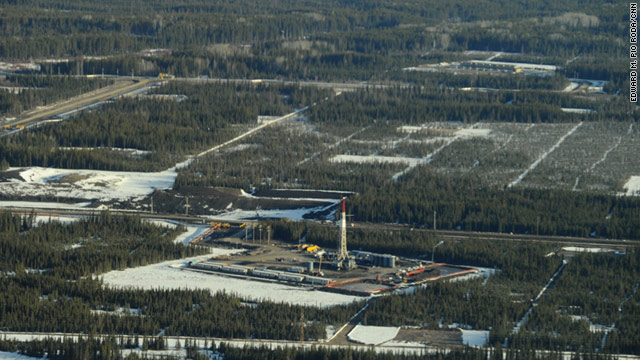
Instead of digging for oil, "in situ" oil fields such as this one, about 500 miles north of Canada's border with Montana, send pipes and steam into the ground to slurp the fuel out of the dirt.

The metal tube is large enough "you could get three half-ton trucks in there," said Zieglgansberger, who is Cenovus' senior vice president at Christina Lake. The fire heats water, which winds around inside the tunnel in pipes that look like brain matter. Cenovus injects that steam into the ground to melt a sticky form of crude that's mixed in with the dirt about 1,200 feet below the surface. The heat and water loosen the oil, allowing it to be pumped back to the surface and then refined.


http://i2.cdn.turner.com/cnn/2011/TECH/innovation/04/19/oil.sands.technology/t1larg.in.situ.oil.sands.cnn.jpg
Instead of leveling the forest, "in situ" oil sands developments in Canada's Alberta just cut strips in the land


The huge flame is the "culprit" because all of the energy it takes to power the process makes extracting oil in this way rather inefficient.

But it's also an opportunity: Cenovus and others see this type of operation as an environmentally friendly alternative to oil sands mining. Instead of clearing the forest to dig out this oil-dirt mixture, and leaving ponds of toxic waste on the surface, in-situ developments such as this do their work underground.

The companies do cut strips out of the forest to conduct seismic tests that tell them where the oil is located. They argue this is both aesthetically pleasing and environmentally friendly. Some environmentalists, however, say the strips still pose problems for local wildlife, including migrating caribou.

The oil industry sees this type of operation as its future. By 2015, most of the oil produced from Canada's massive oil sands reserve will be steamed out of the ground instead of mined, Zieglgansberger said. About 80% of all oil sands will be extracted using this method, according to the Canadian Association of Petroleum Producers.

These technological advances could lead to a cleaner manner of oil extraction.

"Technological advancements are what started this industry, and it's what is going to help this industry continue to grow," said Anne Marie Toutant, vice president of mining operations at Suncor, the company that started mining for oil here in 1967.

The mining side of Canada's oil sands is also making an effort to be greener.

Suncor plans to stop building new tailing ponds, which are toxic lakes of industrial waste that have been blamed for killing migratory birds. The company has developed a new polymer that it can inject into these lakes to turn them back into land much more quickly.

"We're now talking about reducing our footprint to about one quarter of what it would have been," said Bradley Wamboldt, general manager for tailings at Suncor. "Viewed from space, that means you see less of an impact."

The company recently opened up a field on the site of a former tailing pond after filling the hole with dirt and then planting native vegetation on top. The Alberta government has certified only 257 acres of land as fully reclaimed -- 0.16% of the total active mining area. About 6,500 acres are at some intermediate stage of the process, according to the province's environment ministry.

Projects such as these, and the promise of in-situ technology, lead Zieglgansberger to believe technology and innovation can make a dirty fuel cleaner.

"I don't want to do something that's going to make my grandkids say they're ashamed of their grandfather," he said.

The industry gets an unfair rap, he said.

"We're not just a bunch of cowboys out here punching holes in the ground so we can hold up our money bags and go, "Arr! Look at us!' " ( cnn.com )


READ MORE - Can tech make a dirty fuel clean?