There is one rule for the industrialist and that is: Make the best quality of goods possible at the lowest cost possible, paying the highest wages possible

Showing posts with label Tornado. Show all posts

Where Are All The Tornadoes?


Where Are All The Tornadoes? - March is typically when tornado season ramps up, with spring's unstable weather giving rise to thunderstorms and twisters. But this year has been relatively quiet so far.

By early April 2012, there had been 290 tornadoes, including 60 tornado-related deaths. But this year, there have only been about 137 reported twisters, resulting in two fatalities, National Weather Service (NWS) records show.
 
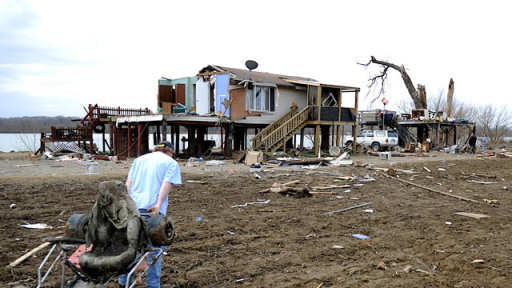
Tornado damage in Henryville, Ind., after a tornado swept through the small community on March 2, 2012.
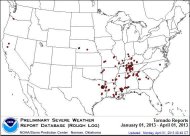
Tornado reports as of April 1, 2013.

So why so few twisters? The main reason is that, so far, it has been a colder-than-average spring and late winter, at least for much of the central and eastern United States, which is where most of the country's tornadoes occur. This can be blamed largely on a stationary mass of warm air over Greenland and the North Atlantic that has blocked the normal flow of air from west to east and south to north, Greg Carbin, a meteorologist with the NWS' Storm Prediction Center, previously told OurAmazingPlanet. This flow of air, known as the jet stream, usually brings more warm, moist air from the south as the Northern Hemisphere begins to heat up in the spring.

Instead, winds have predominated from the north, bathing the eastern two-thirds of the United States in Arctic air. This tamps down the formation of tornadoes, which depend on muggy air to fuel their creation and destructive power, Carbin said.

Tale of two Marches 

A comparison with last year is somewhat incomplete, since 2012's tornado season got off to a roaring start, thanks to plenty of moist, warm air brought north from the Gulf of Mexico, which helped fuel the month's 154 tornadoes, a cluster of which hit on March 2-3 and were the year's first billion-dollar disaster. March 2012 was the warmest March on record in the United States, according to the NWS. 

The average number of tornadoes for March is 76; this past month, there were only 17 reported, Carbin said. The month was also tied as the second-coldest March since 2000.

March tornado outbreaks have been deadly throughout the years, killing 40 people in 1994, 64 people in 1984, 58 people in 1966 and 209 people in 1952.

Super Outbreak anniversary

This week actually marks the anniversary of the deadliest tornado outbreak in U.S. history, which occurred on April 3-4, 1974. The Super Outbreak, as it is called, saw 148 twisters touch down in 13 states, killing 330 people.

Another 5,484 people were injured in a path of destruction that covered more than 2,500 miles, according to the National Oceanic and Atmospheric Administration (NOAA).

"Deadly storms such as the 1974 super outbreak can and will happen again," said meteorologist Ken Haydu in a NOAA statement. "The people who experienced the super outbreak have an important story about tornado awareness and preparedness to pass on to later generations."

Looking into the near future, the cold gripping the eastern United States and lack of extreme weather isn't likely to last. The blocking pattern that has helped lead to cold weather is already weakening, and warmer temperatures are expected early next week as warm air from the Gulf may be allowed to move north. This could also lead to the first significant outbreak of severe weather early next week, Carbin said.

"It does look like there will probably be more storminess in the middle of the country and we have one system moving across the Midwest on Sunday (April 7), and Monday, that could maybe bring some hail and gusty winds," Carbin said. "And that one perhaps sets the stage for a more substantial outbreak of severe weather perhaps by Tuesday to Wednesday." ( LiveScience.com )


READ MORE - Where Are All The Tornadoes?

4 Things You Need to Know About Tornado Season


4 Things You Need to Know About Tornado Season - The start of spring brings blooming flowers, balmier temperatures and something else not so pleasant: the threat of tornadoes.

Tornadoes are some of the toughest weather Mother Nature can dish out, often appearing with little warning and possessing strong winds that can cause serious damage.

Some 1,200 tornadoes touch down across the United States each year, most commonly in the spring months, a transition time when unsettled weather is more likely to occur. 

Even if you don't live in Tornado Alley, you could experience a tornado, and preparation and understanding your risk is key. Here are four things you need to know about tornadoes and tornado season:

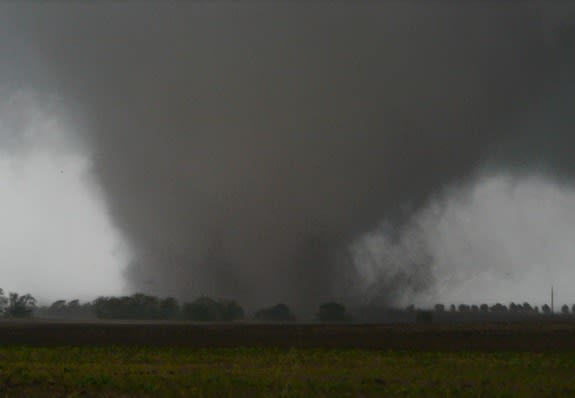
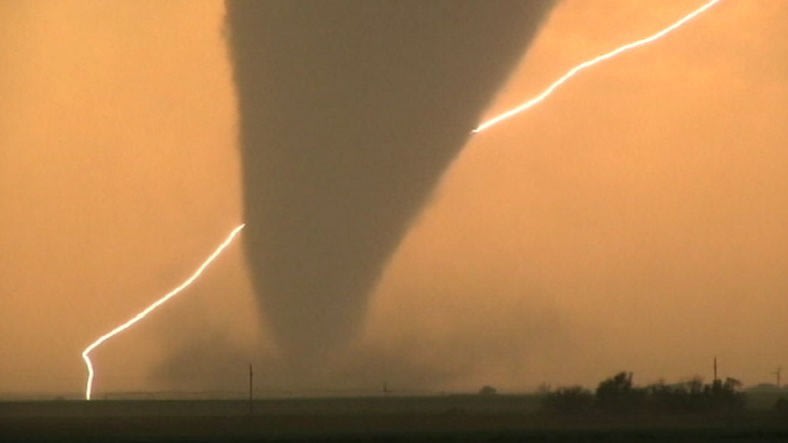
A large tornado touches down near Dallas on April 3, 2012.

1. Tornadoes can happen anywhere, any time of year.

In the popular imagination, tornadoes are associated with the wheat fields and prairies of Kansas and the other Great Plains states — what is popularly called Tornado Alley — but tornadoes happen outside this area every year and, in fact, they can happen all over the world.

Twisters aren't as well documented in other parts of the world as they are in the United States and are typically only noted when they cause significant damage or happen to be caught on camera, according to the U.S. Storm Prediction Center (SPC), part of the National Oceanic and Atmospheric Administration (NOAA). But the data that is available suggests that outside of the United States, other tornado-prone areas include Canada's prairie provinces, northeastern Mexico, northern Argentina, southern Brazil, Britain, Bangladesh and parts of southern Russia, according to the SPC.

The United States is essentially the world capital of tornadoes because of a fluke of geography. The worst tornadoes form from so-called supercell thunderstorms when warm, moist air is trapped underneath cool, dry air and when winds high up travel in a different direction than those at ground level. This setup is common over the central United States in spring when warm Gulf air meets cold Arctic air and the jet stream dips back down over the country after its winter sojourn up north.

What can happen in these storms is that rising warm air hits that change in wind direction and begins to rotate like a pinwheel. The heat continues to build underneath the pinwheel until it punches through this "cap" and turns the pinwheel on its side, creating a mass of rotating clouds called a mesocyclone that can spawn a tornado (though they don't always, and scientists aren't sure why).

Though this setup is most common over Tornado Alley, it can happen anywhere that conditions are right. And some tornadoes, known in storm-chaser parlance as "landspouts," don't form from supercell thunderstorms and have been observed all over the country. Waterspouts also typically don't form from supercells.

While the peak time for tornadoes tends to be in the spring, there is no defined tornado season like there is for hurricanes. The peak in tornado formation in the United States tends to shift from south to north from the late spring to midsummer, according to the SPC.

A so-called second tornado season typically ramps up in November, again because of the transitional weather common in the fall. But tornadoes have happened in every month of the calendar.

Tornadoes can also happen at all times of the day.Storms tend to sweep from west to east across the country, which makes the time that tornadoes occur in particular areas vary. Areas nearer the Rockies are less likely to see the late afternoon and early evening tornadoes that are more common in the East. Research has found that nighttime tornadoes are twice as likely to kill people as daytime tornadoes, largely because people are asleep and may not hear weather radios or sirens. The threat of nighttime tornadoes increases in the winter as daylight hours shrink, and the mid-South leads the nation in experiencing nocturnal twisters.

Hurricanes and tropical storms can produce tornadoes when they form in the summer and fall months, typically in the thunderstorms in their outer bands. The circulations that produce them are often smaller and shorter-lived than in the storms on the Great Plains and so are harder to detect and to warn for, though the tornadoes they spawn can be just as dangerous.

2. The difference between tornado watches and warnings.

This trips a lot of people up, but the difference is pretty simple: A tornado watch is issued by the National Weather Service when weather in a particular area could produce tornadoes (often this means thunderstorms are in the area). But it doesn't mean tornadoes will definitely occur, it just means you need to be alert and paying attention to weather updates.

If you're under a tornado warning, it means that a tornado has been spotted on the ground in your area or that the storm circulation seen on Doppler radar could produce a tornado. Now is the time to seek shelter. It's entirely possible that the tornado will miss you or that one won't form, but it's best to be safe.

To boil that down: If there's a tornado watch, be watching the weather. When there's a warning, that's your warning to take shelter.

3. Don't open your windows. Or shelter under an overpass.

There are a lot of tornado safety myths out there, and many of them can put you in danger instead of making you safer. Here's what you need to know:

Opening your windows doesn't help, it just makes it more likely debris will fly through them into your house. Sheltering under a bridge or overpass if you're on the road is very dangerous, as a tornado's winds could blow you out from underneath or the structure could collapse on top of you. No topographic features or the fact that you're in a big city are barriers against a tornado strike, as plenty of big cities have been hit in the past and likely will be again in the future. 

If you're under a tornado warning, or see a tornado near you, and you're in a building, you want to get away from any windows and any shelves or other things that could fall on you. Basements and cellars are good places to take shelter, but if you don't have either, an interior space on the lowest floor of the structure is probably your best bet. Bathtubs can also provide shelter and covering yourself with a mattress is a good tip.

For more safety tips and ideas on making a tornado safety plan, visit the SPC tornado safety site.

4. Tornado season can't be forecasted.

Again, unlike with hurricane season, there's no forecast for the whole of tornado season, though various large-scale atmospheric patterns, such as the El Niño-La Niña cycle, can affect how a tornado season plays out. Tornado season starts roughly in March and is at its most active from May to June, but plenty of tornado outbreaks buck that pattern.

While some tornado seasons start out busy, they can peter out, like the 2012 season did. Atmospheric patterns last year put the jet stream farther north than it might typically sit in spring. This meant that the air on its southern side wasn't as laden with Gulf moisture and tamped down the tornadic fireworks.

Climatologists can look at the likely atmospheric patterns that will come into play in a given spring to deduce whether it might be a blockbuster year or a quiet one, but individual tornadoes are just too small to be able to predict far in advance.

Effectively, forecasters can only say when and where a given storm system is likely to produce tornadoes with the next few days or hours, then watch for signs of them on radar or for spotters to see one on the ground and send a warning that generally only amounts to a few minutes. But those few minutes can be crucial. So if you're under a tornado warning, pay it heed. ( LiveScience.com )


READ MORE - 4 Things You Need to Know About Tornado Season

Massive tornado rips through Moore, Oklahoma: 51 killed, including 20 children; more feared dead


http://l1.yimg.com/bt/api/res/1.2/91f..eUfJU8Dry2pGW1jkA--/YXBwaWQ9eW5ld3M7cT04NTt3PTYzMA--/http://media.zenfs.com/en/blogs/thelookout/moore-tornado-woman-ap.jpg
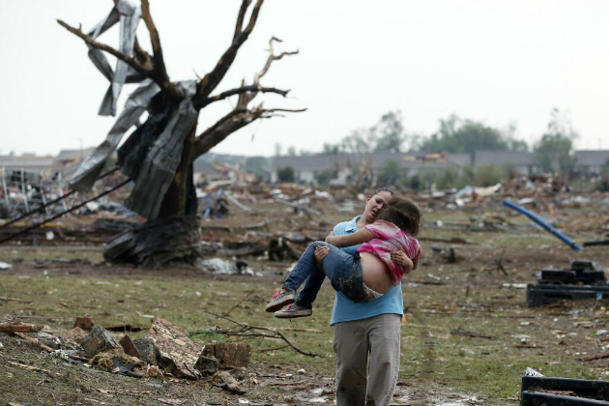
A woman carries a child through a tornado-ravaged neighborhood in Moore, Okla., May 20, 2013. (Sue Ogrocki/AP)

Massive tornado rips through Moore, Oklahoma: 51 killed, including 20 children; more feared dead - A devastating, mile-wide tornado touched down near Oklahoma City on Monday, killing at least 51 people—including 20 children—decimating homes, businesses and a pair of elementary schools in the suburb of Moore. 

According to the state's medical examiner, the death toll was expected to rise. About 40 bodies were expected to be transported to the medical examiner's office overnight. 

The schools—Plaza Towers Elementary and Briarwood Elementary—were leveled by the tornado. It was unclear how many children were in them at the time the twister hit, but according to KFOR-TV, at least seven children died at Plaza Towers, and as many as two dozen more were feared to be trapped inside the rubble. An Associated Press photographer saw rescue workers pull several children out alive. A makeshift triage center was set up in the school's parking lot. 

"This is war-zone terrible," Jon Welsh, a helicopter pilot for KFOR who lives in Moore, said while surveying the damage from the air. "This school is completely gone." 

Emergency officials urged people to remain off the roads so rescue workers and first responders could reach people potentially trapped in rubble, as the National Guard was called in to help in the search for victims. 

Three people were killed at a 7-Eleven in the path of the storm, CBS' KWTV reported, including a man, woman and baby who took cover in a freezer but didn't survive. KFOR reported a fourth person was killed there. 

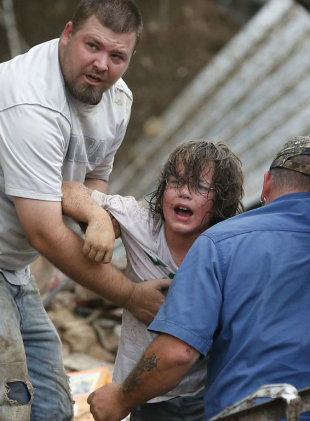
A child is pulled from the rubble at Tower Plaza Elementary in Moore, May 20, 2013. (Sue Ogrocki/AP)

"Our hearts are broken," Oklahoma Gov. Mary Fallin said at a news conference Monday evening. 

The tornado left a debris field 20 miles long and several miles wide. According to the National Weather Service in Norman, Okla., the tornado was on the ground for approximately 40 minutes, and a tornado warning was in effect for 16 minutes before the twister developed. 

Weather officials estimated the strength of the storm to be an F4 or F5 on the Fujita Scale—the highest rating a tornado can achieve. The National Weather Service said the tornado's preliminary classification was an F4, with winds up to 200 mph. 

On May 3, 1999, a tornado outbreak near Oklahoma City produced 14 tornadoes—including an F5 in Moore—killing 36 people and injuring 295 others. A host on KFOR called Monday's storm "the worst tornado damage-wise in the history of the world." 

The devastated area was an estimated 30 square miles. 

"The whole city looks like a debris field," Moore Mayor Glenn Lewis said on NBC's "Nightly News." "Our hospital is pretty much destroyed." 

Communication was snarled as landlines and cellphone towers were knocked down. A water treatment plant in Oklahoma City was also damaged. 

President Barack Obama directed the Federal Emergency Management Agency to prepare to get "all available assistance" to the disaster-hit area. Late Monday, the president declared Oklahoma a major disaster area, making federal aid available to people in Cleveland, Lincoln, McClain, Oklahoma and Pottawatomie counties. 

Families of potential victims were directed by the Red Cross to a website—safeandwell.org—for information about survivors. 

The 106-acre Orr Family Farm, a popular attraction in town, was extremely damaged, its owner said. KFOR reported between 75 and 100 horses perished there as workers took shelter in horse stalls. 

Another, smaller tornado was spotted on the ground west of Meeker, Okla., north of Shawnee, on Monday. 

The Oklahoma House of Representatives canceled its afternoon sessions so lawmakers and staffers could take shelter, the AP said. 

The tornadoes came a day after powerful storms ripped through the center of the country, spawning at least a dozen tornadoes, killing two people and causing extensive damage from Georgia to Minnesota. ( Yahoo! News | The Lookout  )


READ MORE - Massive tornado rips through Moore, Oklahoma: 51 killed, including 20 children; more feared dead

In tornado's wake, worried parents seek out kids


In tornado's wake, worried parents seek out kids — The parents and guardians stood in the muddy grass outside a suburban Oklahoma City church, listening as someone with a bullhorn called out the names of children who were being dropped off — survivors of a deadly tornado that barreled through their community. 

For many families, the ordeal ended in bear hugs and tears of joy as loved ones reunited. Others were left to wait in the darkness, hoping for good news while fearing the worst. 

At least 20 children are among the more than 50 reported dead so far in Moore, the Oklahoma City suburb ravaged by Monday's tornado that packed winds of up to 200 mph. The twister reduced one elementary school to a heaping mound of rubble and heavily damaged another while also flattening block after block of homes. Officials said early Tuesday the death toll could rise by as many as 40. 


http://l3.yimg.com/bt/api/res/1.2/bAZHEArYyMMi1O5gsr8Fpw--/YXBwaWQ9eW5ld3M7Y2g9MjI1Mjtjcj0xO2N3PTM1MzY7ZHg9MDtkeT0wO2ZpPXVsY3JvcDtoPTQwMjtxPTg1O3c9NjMw/http://media.zenfs.com/en_us/News/ap_webfeeds/49102c6f05a47411320f6a706700fa42.jpg
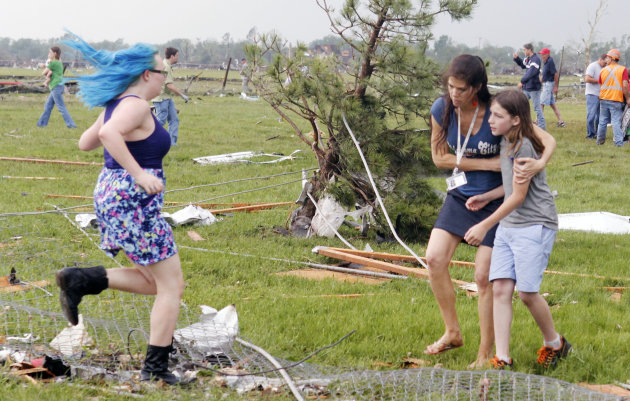
Associated Press/ The Oklahoman, Paul Hellstern - A parent rushes to embrace her child as a teacher escorts her away from Briarwood Elementary school after a tornado destroyed the school in south Oklahoma City, Okla, Monday, May 20, 2013. Near SW 149th and Hudson. (AP Photo/ The Oklahoman, Paul Hellstern)

http://l.yimg.com/bt/api/res/1.2/T43WXC7bqYf1cE83s1mlzw--/YXBwaWQ9eW5ld3M7Zmk9aW5zZXQ7aD0xMDI0O3E9Nzk7dz0xNDA1/http://media.zenfs.com/en_us/News/ap_webfeeds/8e6a7874059d7311320f6a706700f744.jpg
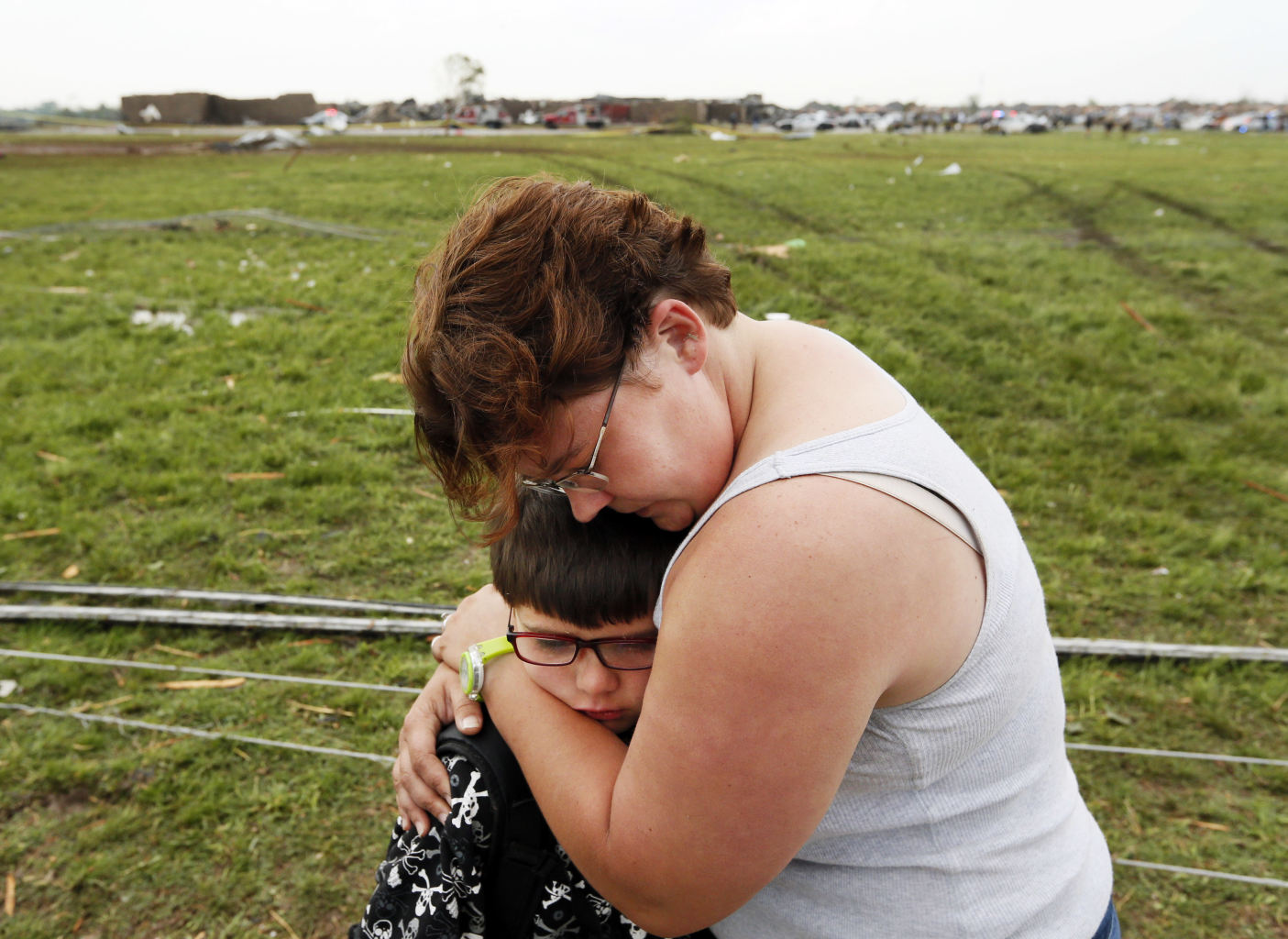
Rebekah Stuck hugs her son, Aiden Stuck, 7, after she found him in front of the destroyed Briarwood Elementary after a tornado struck south Oklahoma City and Moore, Okla., Monday, May 20, 2013. Aiden Stuck was inside the school when it was hit. (AP Photo/ The Oklahoman, Nate Billings)

At St. Andrews United Methodist Church, parents stared into the distance as they waited, some holding the hands of young children who were missing siblings. 

Tonya Sharp and Deanna Wallace sat at a table in the church's gymnasium waiting for their teenage daughters. As Sharp and Wallace spoke, a line of students walked in. 

Wallace spotted her 16-year-old daughter, who came quickly her way and jumped into her mother's arms, pushing her several steps backward in the process. But Sharp didn't see her daughter, a 17-year-old who has epilepsy. She worried her daughter hadn't taken her medicine. 

"I don't know where she's at," Sharp said. Later, she went to speak to officials who helped her register so she could be notified as soon as her daughter was found. 

Shelli Smith had to walk miles to find her children. She was reunited with her 14-year-old daughter, Tiauna, around 5 p.m. Monday, but hadn't yet seen her 16-year-old son, TJ, since he left for school that morning. 

TJ's phone had died, but he borrowed a classmate's phone to tell his mother where he was. However, Smith couldn't get to him due to the roadblocks. So she parked her car and started walking. 

It took her three hours, but a little after sunset, she found him. She grabbed her son and squeezed him in a tight hug that lasted for several seconds before letting go. TJ hugged his sister, and then hugged his mom again. 

The family had a long walk back to their car and then home, but she said she didn't mind. 

"I was trying to get him and they wouldn't let me," she said, adding later: "I was like, 'You know what? I'm going to get my son.'" 

Renee Lee summed up the struggle for many parents with multiple children — find the ones who they hadn't yet seen, while calming the younger ones they had with them. 

Lee is the mother of two daughters Sydney Walker, 16, and Hannah Lee, 8. When the storm came, she tried to pick Sydney up from school. Sydney told her on the phone that they wouldn't let her come in. While Lee and her younger daughter waited in their home, which wasn't hit, Sydney was safe in the room at a local high school. 

Lee said she believed Sydney wasn't hurt and seemed resigned to the severe weather outbreaks. 

"There's been so many of them, it doesn't even faze me," she said. "You just do what you gotta do. It's part of living here." ( Associated Press )


READ MORE - In tornado's wake, worried parents seek out kids

Monster tornado flattens suburb of Oklahoma City


Monster tornado flattens suburb of Oklahoma City - A huge tornado with winds of up to 200 miles per hour devastated the Oklahoma City suburb of Moore on Monday, ripping up at least two elementary schools and a hospital and leaving a wake of tangled wreckage. 

At least four people were killed, KFOR television said, citing a reporter's eyewitness account, and hospitals said dozens of people were injured as the dangerous storm system threatened as many as 10 U.S. states with more twisters. 

Television video showed tracts of homes destroyed, cars tossed about and piled atop one another, and at least one building on fire. 

http://l2.yimg.com/bt/api/res/1.2/mfjH9nnCtFOJ5YkYHBRB2g--/YXBwaWQ9eW5ld3M7Zmk9ZmlsbDtoPTQ0MztxPTg1O3c9Nzg4/http://media.zenfs.com/en-US/video/video.abcnewsplus.com/c319c4061c8b5185771a99a8b4a48d1b

Rescue workers pulled third-graders from the devastated Plaza Towers Elementary school in Moore, a KFOR television reporter said from the scene, and aerial video showed first responders sifting through the rubble left behind. 

"I have never seen anything like this in my 18 years covering tornadoes here in Oklahoma City. This is without question the most horrific," said Lance West, a reporter for KFOR. 

Briarwood Elementary School, which also stood in the storm's path, was all but destroyed. On the first floor, sections of walls had been peeled away, affording clear views into the building, while in other areas, cars hurled by the storm winds were lodged in the walls. 

While the school was a wreck, nearby playground equipment stood undamaged, though littered with rubble. 

Across the street, people picked through the remains of their homes, looking for any possessions they might salvage. 

The National Weather Service assigned the twister a preliminary ranking of EF4 on the Enhanced Fujita Scale, meaning the second most powerful category of tornado with winds up to 200 mph. 

At least 45 people were injured, according to officials of four hospitals. 

"They (injured) are coming in minute by minute," said Integris Southwest Medical Center spokeswoman Brooke Cayot. Of the 19 injured there, seven were in critical condition, seven serious and five listed as fair or good, Cayot said. 

The University of Oklahoma Medical Center had received at least 20 injured. St. Anthony Healthplex South in Oklahoma City said it received four patients and Midwest Regional received four. 

Moore Medical Center sustained significant damage. 

"The whole city looks like a debris field," Glenn Lewis, the mayor of Moore, told NBC. 

"It looks like we have lost our hospital. I drove by there a while ago and it's pretty much destroyed," Lewis said. 

The massive twister struck at the height of tornado season, and more were forecast. On Sunday, tornadoes killed two people and injured 39 in Oklahoma. 

Witnesses said Monday's tornado appeared more fierce than the giant twister that was among the dozens that tore up the region on May 3, 1999, killing more than 40 people and destroying thousands of homes. That tornado ranked as an EF5, meaning it had winds over 200 mph. 

The 1999 event ranks as the third-costliest tornado in U.S. history, having caused more than $1 billion in damage at the time, or more than $1.3 billion in today's dollars. Only the devastating Joplin and Tuscaloosa tornadoes in 2011 were more costly. 

OTHER STATES THREATENED 

The National Weather Service predicted a 10 percent chance of tornadoes in parts of Texas, Oklahoma, Arkansas, Kansas, Missouri and Illinois. It said parts of four other states - Wisconsin, Indiana, Michigan and Iowa - have a 5 percent risk of tornadoes. 

The area at greatest risk includes Joplin, Missouri, which on Wednesday will mark two years since a massive tornado killed 161 people. 

The latest tornado in Oklahoma came as the state was still recovering from a strong storm on Sunday with fist-sized hail and blinding rain. 

Two men in their 70s died in the storm, including one at a mobile home park on the edge of the community of Bethel Acres near Oklahoma City, said Keli Cain, a spokeswoman for the Oklahoma Office of Emergency Management. Thirty-nine people were injured around the state as storms toppled trees and tore up rooftops, she said. 

Several hundred homes and buildings were thought to have been damaged or destroyed and approximately 7,000 customers were left without power in Oklahoma. "There is definitely quite a bit of damage," Cain said. 

Oklahoma Governor Mary Fallin declared 16 counties disaster areas. 

More than two dozen tornadoes were spotted in Iowa, Oklahoma, Kansas and Illinois, according to the National Oceanic and Atmospheric Administration and local news reports. Hail stones, some as large as baseballs, were reported from Georgia to Minnesota, NOAA said. 

The tornado season in the United States had been unusually quiet until last week, when a tornado struck the town of Granbury, Texas, killing six people. ( Reuters )


READ MORE - Monster tornado flattens suburb of Oklahoma City

Tornado strikes beachfront neighborhood in NYC


Tornado strikes beachfront neighborhood in NYC — A tornado swept out of the sea and hit a beachfront neighborhood in New York City on Saturday, hurling debris in the air, knocking out power and startling residents who once thought of twisters as a Midwestern phenomenon.

Videos taken by bystanders showed a funnel cloud sucking up water, then sand, and then small pieces of buildings, as it moved through the Breezy Point section of the Rockaway peninsula in Queens.

Residents had advance notice. The National Weather Service had issued a tornado warning for Queens and Brooklyn at around 10:40 a.m. The storm took people by surprise anyway when it struck about 30 minutes later.


http://l2.yimg.com/bt/api/res/1.2/8hOUjE0Bjy859irc2urNCw--/YXBwaWQ9eW5ld3M7Y2g9MTQxNDtjcj0xO2N3PTIwMDA7ZHg9MDtkeT0wO2ZpPXVsY3JvcDtoPTQ0NjtxPTg1O3c9NjMw/http://media.zenfs.com/en_us/News/ap_webfeeds/5115196d5d019b191a0f6a70670065e9.jpg
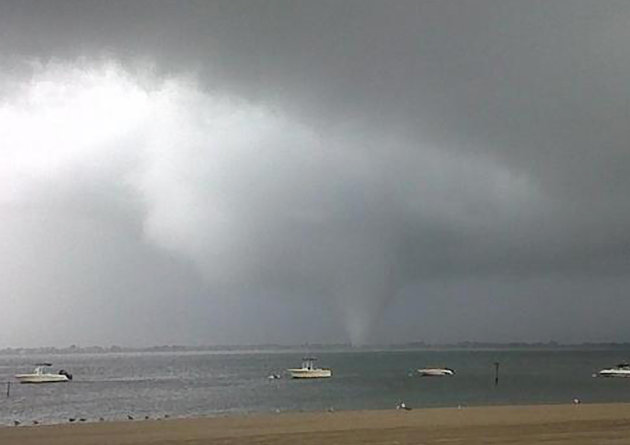
Associated Press/Joey Mure - This photo provided by Joey Mure, shows a storm cloud over the Breezy Point area of Queens section of New York, on Saturday, Sept. 8, 2012. A Fire Department spokesman said there were power lines down and possibly other damage in the Point Breeze section of the Rockaway peninsula in Queens. The general manager of the Breezy Point Surf Club tells the Associated Press the storm ripped up cabanas and even picked up industrial-sized metal trash bins. The National Weather Service issued a tornado warning for Queens and Brooklyn as a line of strong thunderstorms moved through the city. The service said radar detected a "strong rotation" in the storm, but there was no immediate confirmation that a twister actually formed. (AP Photo/Joey Mure)


"I was showing videos of tornadoes to my 4-year-old on my phone, and two minutes later, it hit," said neighborhood resident Peter Maloney. "Just like they always say, it sounded like a train."

In the storm's wake, the community of seaside bungalows was littered with broken flower pots, knocked-down fences and smashed windows.

At the Breezy Point Surf Club, the tornado ripped the roofs off rows of cabanas, scattered deck chairs and left a heavy metal barbecue and propane tank sitting in the middle of a softball field, at least 100 yards from any nearby home.

"It picked up picnic benches. It picked up Dumpsters," said the club's general manager, Thomas Sullivan.

Half an hour later the weather was beautiful, but he had to close the club to clean up the damage.

The roof of Bob O'Hara's cabana was torn off, leaving tubes of sunscreen, broken beer bottles and an old TV set exposed to the elements.

"We got a new sunroof," said O'Hara, who has spent summer weekends at the Breezy Point club for his entire 52 years. "The TV was getting thrown out anyway," he added.

The tornado struck as part of a line of storms that were expected to bring damaging winds, hail, heavy rain and possibly more tornadoes throughout the mid-Atlantic and Northeast on Saturday. Across New York state, in Buffalo, strong winds from a broad front of thunderstorms blew roofing off of some buildings and sent bricks falling into the street.

The city of Albany canceled the evening portion of an outdoor jazz festival because of the threat of storms, and hundreds of upstate New York homes lost power as the weather system moved through.

The storm system killed four people, including a child, in Oklahoma on Friday.

Radar data, video and witness reports confirmed that the cyclone that hit New York City was a tornado, National Weather Service meteorologist Dan Hofmann said. He said an inspection team would assess the damage and before estimating the strength of the storm. Hofmann said some witnesses were reporting that the wind had been strong enough to lift cars off the pavement.

Lizann Maher, a worker at Kennedy's Restaurant at the edge of Jamaica Bay, said she saw a "swirling cone kind of thing with something flying in it" come down and then head back out into the water toward Brooklyn.

"It was scary. We have all glass so we kept saying, 'Get away from the glass!' just in case it did come back around," she said.

Tornadoes were once exceedingly rare in New York, but they have occurred with regularity in recent years. A small tornado uprooted trees on Long Island last month. In 2010, a September storm spawned two tornadoes that knocked down thousands of trees and blew off a few rooftops in Brooklyn and Queens. A small tornado struck the same year in the Bronx. In 2007, a more powerful tornado damaged homes in Brooklyn and Staten Island.

The storm delayed play at the U.S. Open tennis tournament a few miles away. The women's final, scheduled for Saturday night, was postponed until Sunday because of a forecast of additional rain. The second of two men's semifinals was suspended Saturday with David Ferrer leading Novak Djokovic 5-2 in the first set. ( Associated Press )


Blog : Paying The Highest
Post : Tornado strikes beachfront neighborhood in NYC

READ MORE - Tornado strikes beachfront neighborhood in NYC

2 tornadoes strike in NYC


2 tornadoes strike in NYC — Two tornadoes struck New York City on Saturday, one swept out of the sea and hit a beachfront neighborhood and the second, stronger twister hit moments later, hurling debris in the air, knocking out power and startling residents who once thought of twisters as a Midwestern phenomenon.

Videos taken by bystanders showed a funnel cloud sucking up water, then sand, and then small pieces of buildings, as the first moved through the Breezy Point section of the Rockaway peninsula in Queens.


http://l2.yimg.com/bt/api/res/1.2/8hOUjE0Bjy859irc2urNCw--/YXBwaWQ9eW5ld3M7Y2g9MTQxNDtjcj0xO2N3PTIwMDA7ZHg9MDtkeT0wO2ZpPXVsY3JvcDtoPTQ0NjtxPTg1O3c9NjMw/http://media.zenfs.com/en_us/News/ap_webfeeds/5115196d5d019b191a0f6a70670065e9.jpg
Associated Press/Joey Mure - This photo provided by Joey Mure, shows a storm cloud over the Breezy Point area of Queens section of New York, on Saturday, Sept. 8, 2012. A Fire Department spokesman said there were power lines down and possibly other damage in the Point Breeze section of the Rockaway peninsula in Queens. The general manager of the Breezy Point Surf Club tells the Associated Press the storm ripped up cabanas and even picked up industrial-sized metal trash bins. The National Weather Service issued a tornado warning for Queens and Brooklyn as a line of strong thunderstorms moved through the city. The service said radar detected a "strong rotation" in the storm, but there was no immediate confirmation that a twister actually formed. (AP Photo/Joey Mure)


The second hit west, in the Canarsie section of Brooklyn also near the water, about seven minutes later. The National Weather Service said winds were up to 110 miles per hour, and several homes and trees were damaged.

No serious injuries were reported.

Residents had advance notice. The weather service had issued a tornado warning for Queens and Brooklyn at around 10:40 a.m. The storm took people by surprise anyway when it struck about 20 minutes later.

"I was showing videos of tornadoes to my 4-year-old on my phone, and two minutes later, it hit," said Breezy Point neighborhood resident Peter Maloney. "Just like they always say, it sounded like a train."

In the storm's wake, the community of seaside bungalows was littered with broken flower pots, knocked-down fences and smashed windows.

At the Breezy Point Surf Club, the tornado ripped the roofs off rows of cabanas, scattered deck chairs and left a heavy metal barbecue and propane tank sitting in the middle of a softball field, at least 100 yards from any nearby home.

"It picked up picnic benches. It picked up Dumpsters," said the club's general manager, Thomas Sullivan.

Half an hour later the weather was beautiful, but he had to close the club to clean up the damage.

The roof of Bob O'Hara's cabana was torn off, leaving tubes of sunscreen, broken beer bottles and an old TV set exposed to the elements.

"We got a new sunroof," said O'Hara, who has spent summer weekends at the Breezy Point club for his entire 52 years. "The TV was getting thrown out anyway," he added.

The second tornado tore through parts of Brooklyn with strong winds, causing structural damage to several homes and felling trees.

The tornado struck as part of a line of storms that were expected to bring damaging winds, hail, heavy rain and possibly more tornadoes throughout the mid-Atlantic and Northeast on Saturday. Across New York state, in Buffalo, strong winds from a broad front of thunderstorms blew roofing off of some buildings and sent bricks falling into the street.

The city of Albany canceled the evening portion of an outdoor jazz festival because of the threat of storms, and hundreds of upstate New York homes lost power as the weather system moved through.

The storm system killed four people, including a child, in Oklahoma on Friday.

Radar data, video and witness reports confirmed that the cyclone that hit New York City was a tornado, National Weather Service meteorologist Dan Hofmann said. He said an inspection team would assess the damage and before estimating the strength of the storm. Hofmann said some witnesses were reporting that the wind had been strong enough to lift cars off the pavement.

Lizann Maher, a worker at Kennedy's Restaurant at the edge of Jamaica Bay, said she saw a "swirling cone kind of thing with something flying in it" come down and then head back out into the water toward Brooklyn.

"It was scary. We have all glass so we kept saying, 'Get away from the glass!' just in case it did come back around," she said.

Tornadoes were once exceedingly rare in New York, but they have occurred with regularity in recent years. A small tornado uprooted trees on Long Island last month. In 2010, a September storm spawned two tornadoes that knocked down thousands of trees and blew off a few rooftops in Brooklyn and Queens. A small tornado struck the same year in the Bronx. In 2007, a more powerful tornado damaged homes in Brooklyn and Staten Island.

The storm delayed play at the U.S. Open tennis tournament a few miles away. The women's final, scheduled for Saturday night, was postponed until Sunday because of a forecast of additional rain. The second of two men's semifinals was suspended Saturday with David Ferrer leading Novak Djokovic 5-2 in the first set. ( Associated Press )


Blog : Paying The Highest
Post : 2 tornadoes strike in NYC

READ MORE - 2 tornadoes strike in NYC

TORNADO POSSIBLE. MIGHT KILL YOU ... MIGHT NOT


TORNADO POSSIBLE. MIGHT KILL YOU ... MIGHT NOT - Why aren’t National Weather Service storm warnings scary enough?

The National Weather Service on Monday began testing new, scarier storm warnings in Kansas and Missouri, two of the most tornado-prone states. The messages beamed to news outlets now might say a tornado will cause “mass devastation” or “complete destruction” or that a particularly foreboding twister is “not survivable.” Why weren’t the old warnings scary enough?


http://www.slate.com/content/dam/slate/articles/life/explainer/2012/03/120402_EXP_TornadoEX.jpg.CROP.rectangle3-large.jpg
A mesocyclone tornado, a violently rotating column of air that descends from a thunderstorm. The most violent tornadoes are capable of tremendous destruction with wind speeds of 250 mph or more.


Because they all sounded the same. Until now, storm warnings were short on details and didn’t clearly distinguish between run-of-the-mill gusts and deadly tornadoes. Before 1950, the Weather Bureau (as it was then called) refused to make tornado predictions at all, fearing that they would incite panic. It remained reticent to issue warnings long after that, partly because tornado prediction was a tricky business: The only way to know for sure that one was coming was for someone to spot a funnel cloud. At such a point, an official tornado report had to be taken seriously—especially since the news might be broadcast only minutes before the twister hit. Sometimes the twister hit first.

The tornado warning system hasn’t changed much since it began in the 1950s—a time when meteorologists sat in darkened rooms, using cathode ray tubes and grease pencils to piece together images of storms based on radar data. Stronger radar echoes indicated where rain was really heavy, but there was no reliable way to remotely sense storm-system rotation or high wind speeds—the tell-tale signs of a tornado.

The biggest technological breakthrough came in the 1990s, as Doppler radar made it possible to detect not only the contours of a storm, but also wind directions and velocities inside the storm. Those data allow meteorologists to see how a storm system is rotating, making it easier to predict tornadoes before they actually form or touch down. These days, the average lead time for a tornado warning is about 12 minutes. The twister that killed 160 people in Joplin, Mo., last year came with 20 minutes’ advance notice.

But even as the National Weather Service has gotten better at anticipating tornadoes, some experts worry that the public has been desensitized to its alerts. About three in four warnings predict tornadoes that never touch down. And whether the storm is minor or deadly, the recommendation for how to respond is the same: “TAKE COVER NOW.”

Many other jarring aspects of the warnings reflect the National Weather Service’s long-held methods, from their screeching tones and garbled computer voices to the use of all capital letters in written dispatches. Until the 1980s, the reports were transmitted to news outlets via teleprinters—basically, typewriters hooked up to phone lines. Early teletype systems required all capital letters and prohibited many forms of punctuation (the NWS uses ellipses instead of commas), and the weather service has stuck to that format ever since. One reason is that it remains the standard of the Geneva-based World Meteorological Organization, partly to accommodate a few countries that still rely on old-fashioned technologies. In recent years, the NWS has begun experimenting with a new report format that includes such innovations as lowercase letters and all kinds of punctuation marks.

The synthesized voice that broadcasts information on weather radios and the alert tones that precede emergency broadcasts date from the late 1990s. Until then, the alert tone was a steady analog shriek that served only to notify broadcasters and listeners of an incoming message (though in some cases, it was “only a test”). Since 1997, it has been a set of digital bursts—that nails-on-a-chalkboard noise—containing actual weather information that displays on broadcasters’ receiving equipment. The automated voice debuted a year later, allowing weather radio to provide updates in near-real time. Before that, the information was recorded by humans, who could only update the information for one locale at a time. The original electronic voice, described charitably by one meteorologist as “sounding a bit like Arnold Schwarzenegger,” has undergone tweaks for clarity over the years. It’s designed to pronounce words phonetically for maximum flexibility rather than being preprogrammed to speak certain phrases or word combinations, which is why it can’t match the smoothness of voices such as the iPhone’s Siri. ( slate.com )

READ MORE - TORNADO POSSIBLE. MIGHT KILL YOU ... MIGHT NOT

Tornadoes rake Dallas area, more than a dozen hurt


Tornadoes rake Dallas area, more than a dozen hurt — Tornadoes raked the Dallas area Tuesday, crumbling a wing of a nursing home, peeling roofs from dozens of homes and spiraling big-rig trailers into the air like footballs. More than a dozen injuries were reported.

Overturned cars left streets unnavigable and flattened trucks clogged highway shoulders. Preliminary estimates were that six to 12 twisters had touched down in North Texas, senior National Weather Service meteorologist Eric Martello said. But firm numbers would only come after survey teams checked damage Wednesday, he said.


http://l.yimg.com/bt/api/res/1.2/9f2asg3prOjlhLHpFWDplA--/YXBwaWQ9eW5ld3M7Zmk9aW5zZXQ7aD0zNjE7cT04NTt3PTYzMA--/http://media.zenfs.com/en_us/News/ap_webfeeds/02f820d37957ce090b0f6a706700069f.jpg
Threatening clouds continue to move through southern Tarrant and Dallas counties after a tornado swept through Lancaster, Texas on Tuesday, April 3, 2012. Tornadoes tore through the Dallas area Tuesday, peeling roofs off homes, tossing big-rig trucks into the air and leaving flattened tractor trailers strewn along highways and parking lots. (AP Photo/The Fort Worth Star-Telegram, Ron Ennis) MAGS OUT


In suburban Dallas, Lancaster police officer Paul Beck said 10 people were injured, two of them severely. Three people were injured in Arlington, including two residents of a nursing home who were taken to a hospital with minor injuries after swirling winds clipped the building, city assistant fire chief Jim Self said.

"Of course the windows were flying out, and my sister is paralyzed, so I had to get someone to help me get her in a wheelchair to get her out of the room," said Joy Johnston, who was visiting her 79-year-old sister at the Green Oaks Nursing and Rehabilitation Center. "It was terribly loud."

Dallas-Fort Worth International Airport canceled hundreds of flights and diverted others heading its way. Among the most stunning video was an industrial section of Dallas, where rows of empty tractor-trailers crumpled like soda cans littered a parking lot.

"The officers were watching the tornadoes form and drop," Kennedale police Chief Tommy Williams said. "It was pretty active for a while."

The confirmed tornadoes touched down near Royce City and Silver Springs, said National Weather Service meteorologist Matt Bishop.

April is the peak of the tornado season that runs from March until June. Bishop said Tuesday's storms suggest that "we're on pace to be above normal."

Johnston said her sister was taken to the hospital because of her delicate health. Another resident at the nursing home, Louella Curtis, 92, said workers roused her out of bed and put her in the hall.

"The hallways were all jammed," Johnston said. "Everyone was trying to help each other to make a path for others. I'd say everybody was out of their rooms within 20 minutes."

Most of Dallas was spared the full wrath of the storm. Yet in Lancaster, television helicopters panned over exposed homes without roofs and flattened buildings. Broken sheets of plywood blanketed lawns and covered rooftops.

A pastor at one Lancaster church saw debris swirling in the wind, then herded more than 30 children, some as young as newborns, into a windowless room to ride out the storm. Nearby at the church's school, about 60 more children hid in another windowless room near the women's bathroom.

An entire wall of Cedar Valley Christian Academy wound up being taken out in the storm. Pastor Glenn Young said he didn't know when the school might re-open.

"I'm a little concerned," Young said. "This is our livelihood."

Residents could be seen walking down the street with firefighters and peering into homes, looking at the damage after the storm passed.

Devlin Norwood said he was at his Lancaster home when he heard the storm sirens. He said he made a quick trip to a nearby store when he saw the funnel-shaped tornado lower, kick up debris and head toward his neighborhood.

"I didn't see any damage until I got back home. We had trees destroyed, fences down, boards down, boards penetrating the roof and the house, shingles damaged," said Norwood, 50, an accountant and graduate student.

The storm pushed cars into fences and toppled trees. Branches and limbs scattered across lawns and residential streets, and in one driveway, a tow-behind RV was left torn apart and crumpled.

"Obviously we're going to have a lot of assessments to make when this is done," Dallas County spokeswoman Maria Arita said.

American Airlines canceled more than 450 arriving and departing flights at its hub airport by late Tuesday afternoon, and 37 other incoming flights had been diverted to different airports.

DFW Airport spokesman David Magana said more than 110 planes were damaged by hail. It wasn't clear how many belonged to American Airlines, but American and American Eagle had pulled 101 planes out of service for hail-damage inspections.

Flights also were canceled at Dallas Love Field, which is a big base for Southwest Airlines. That airline canceled more than 45 flights in and out of the airport by Tuesday evening.

Meteorologists said the storms were the result of a slow-moving storm system centered over northern New Mexico. ( Associated Press )

READ MORE - Tornadoes rake Dallas area, more than a dozen hurt

Swarm of tornadoes rip through Dallas-Fort Worth


Swarm of tornadoes rip through Dallas-Fort Worth - Up to a dozen tornadoes skipped through the densely populated Dallas-Fort Worth area in Texas on Tuesday, ripping apart homes, tossing tractor-trailer trucks into the air and injuring at least 17 people, but there were no reported deaths.

Ten to 12 tornadoes touched down during a massive storm that brought chaos from high winds, rain and hail to the nation's fourth most populous metropolitan area, said National Weather Service meteorologist Jesse Moore.


http://l.yimg.com/bt/api/res/1.2/cwtqn9RdemaJmvBBxp1F9w--/YXBwaWQ9eW5ld3M7Zmk9aW5zZXQ7aD0zMDA7cT04NTt3PTQ1MA--/http://media.zenfs.com/en_us/News/Reuters/2012-04-04T022421Z_1_CBRE83306OQ00_RTROPTP_2_USA-TORNADO-DALLAS.JPG
Jason Moffett moves belongings out of a house which was destroyed after a series of tornadoes ripped through the Dallas suburb of Lancaster, Texas, April 3, 2012. REUTERS/Tim Sharp

Many of the 6.3 million area residents were forced to scramble for safety as the storm bore down during the early afternoon, when schools and workplaces were open.

Seven people were injured in the suburb of Arlington, police said. Most suffered only minor injuries but one person hit by a falling tree was in critical condition, said Arlington police spokeswoman Cheryl Carpenter.

In one of the hardest hit areas south of Dallas, Lancaster, tornadoes damaged 300 structures.

Of the 10 people injured in Lancaster, two of them were severely hurt, said Lancaster police spokesman Paul Beck.

Authorities were amazed that no one was killed given the intensity of the storm, the number of tornadoes and the population density of the area.

"We dodged a big bullet ... It really is a miracle," Dallas Mayor Mike Rawlings said in an interview on CNN.

The survival rate from a tornado is higher during the daylight hours because people are more likely to hear or see the warnings and take cover, meteorologists said. Twisters are most deadly when people are sleeping at night, they said.

One tornado lifted trucks like toys in the Flying J Truck Plaza in Dallas, said truck driver Michael Glennon, who caught the destruction on his video camera as debris swirled through the air.

"We've seen roofs blown off, houses totally flattened, tractor-trailers knocked over," Moore said.

On Tuesday evening, the storm system moved east into Oklahoma, Arkansas and Louisiana with the potential of producing high winds and more tornadoes, Moore said.

Sixth-grader Hailey Pellerin said she and other students had just started lunch when teachers quickly herded students back to their classrooms in their southwest Arlington elementary school.

"We had to duck and cover for two hours," she said. The students were seated, lined up against a wall in their classrooms and covered their heads. "The power went out so it was dark and hot."

The tornado passed about 200 yards from the school, her father David Pellerin said.

"We were so lucky because it came so close but passed by the two schools my kids attend," said Pellerin, the father of three.

US TORNADO SEASON STARTS EARLY

Some 110 planes were damaged by hail and 400 flights canceled at Dallas-Fort Worth International Airport, the eighth busiest in the world, stranding thousands of passengers. Another 40 incoming flights were diverted.

During the height of the storm, witnesses at the airport said the sky turned dark and passengers were herded away from windows and into stairwells and restrooms.

The U.S. tornado season has started early this year. Tornadoes have been blamed for 57 deaths so far in 2012 in the Midwest and South, raising concerns that this year would be a repeat of 2011, the deadliest year in nearly a century for the unpredictable storms.

In 2011, there were 550 tornado deaths, including 316 lives lost on April 27 in five southern states, and a massive tornado that killed 161 people in Joplin, Missouri, on May 22.

Tuesday's tornadoes in Texas could prove more costly than a hailstorm nearly a year ago in the Dallas area that caused more than $100 million in insured losses. That April 15, 2011, storm was less damaging in terms of hail and winds.

Insurers have already lost as much as $2 billion during the 2012 tornado season, mostly from a record March 2 outbreak. That follows record-breaking losses of $26 billion during the 2011 tornado season. ( Reuters )

READ MORE - Swarm of tornadoes rip through Dallas-Fort Worth

Multiple tornadoes cause massive damage across Dallas, Fort Worth and North Texas


Multiple tornadoes cause massive damage across Dallas, Fort Worth and North Texas - Possibly a dozen tornadoes rumbled across the Dallas-Fort Worth metro area Tuesday, leveling homes and tossing big-rigs around like toy trucks. North Texans scrambled for cover as warning sirens blared throughout the afternoon.

"Twelve is a preliminary number," said Steve Fano, a meteorologist with the National Weather Service in Fort Worth. "We won't know for sure until tomorrow when we can get out and assess the damage."


http://l.yimg.com/bt/api/res/1.2/CCQjiTewbmv4v8fKSo0zlQ--/YXBwaWQ9eW5ld3M7Zmk9aW5zZXQ7aD00MjA7cT04NTt3PTYzMA--/http://media.zenfs.com/en_us/News/Reuters/2012-04-04T012607Z_720894644_GM1E8440QF701_RTRMADP_3_USA-TORNADO-DALLAS.JPG
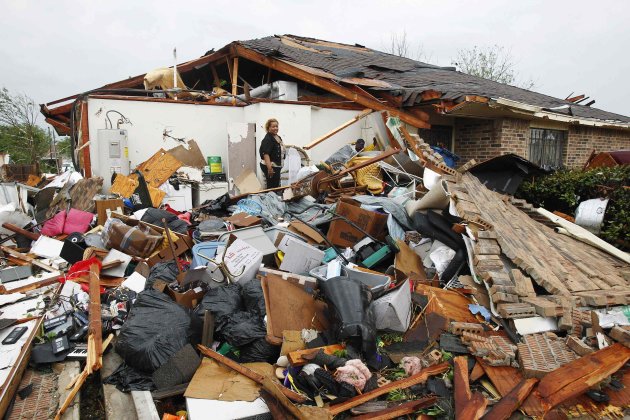
A resident sorts through the remains of her damaged home after a series of tornadoes ripped through the Dallas suburb of Lancaster, Texas, April 3, 2012. Up to a dozen tornadoes skipped through the densely populated Dallas-Fort Worth area in Texas on Tuesday, ripping apart homes and tossing tractor-trailer trucks into the air, but there were no reports of serious injuries or deaths. REUTERS/Tim Sharp (UNITED STATES - Tags: ENVIRONMENT DISASTER TPX IMAGES OF THE DAY)


Some injuries, but no confirmed fatalities, were reported. Homes and businesses in at least seven counties were hit hard.

"These weren't small tornadoes," Fano said.

By evening, the most severe storms were moving into Arkansas and Louisiana.

In Forney, a bedroom community 22 miles east of Dallas, officials were inspecting an elementary school that sustained damage. Officials said no students were harmed, but homes around the school were flattened.

"Oh no! Oh no!" a storm spotter witnessing the Forney tornado screamed live on Dallas's CBS 11 TV. "Oh my goodness. I can see the homes just being torn apart."

At the height of the storms, the National Weather Service declared Dallas-Fort Worth counties to be under a "tornado emergency." Sirens blared in downtown Dallas and Fort Worth, schools huddled children in hallways and passengers at DFW International Airport were rushed to safe areas.

Stay-at-home mom Jean Kelly saw the madness unfold from the 19th floor of her high-rise apartment in downtown Dallas. "Today, I heard the thunder first. Then, I heard the sound that no one, especially not a new parent, wants to hear: the tornado siren," she wrote in a first-hand account for the Yahoo Contributor Network.

Some of the most impressive photos showed several tractor-trailer trucks toppled and ripped apart.

"It's one of the worst tornado outbreaks we've seen in a longtime here in North Texas," said Larry Mowry, meteorologist at CBS 11.

Amateur images of the twisters flooded social media, including baseball player Mike Napoli's video of a funnel cloud passing over the Rangers Ballpark in Arlington.

The first tornado touched down 20 miles southwest of Fort Worth as many workers were returning from lunch. From there, it seemed like watches and warnings started coming from all directions.

"What a hopeless feeling," Ryan Enos wrote in a first-person account for the Yahoo Contributor Network. "I just sat there as the storm inched closer and closer on the screen. It passed directly over where we live."

Mayors of a few North Texas towns declared their cities to be local disaster areas.

As nightfall approached, scores of homeowners cleaned up what they could. Some scoured damaged neighborhoods for family photos and other personal items. Others were reportedly looking for missing pets. The American Red Cross was dispatched to the hardest hit areas and were seeking volunteers to help dispense aid. ( Local Dallas )

READ MORE - Multiple tornadoes cause massive damage across Dallas, Fort Worth and North Texas

Exploitation of Destruction


Exploitation of Destruction - As if digging out of the rubble of deadly tornadoes were not enough of a challenge: Midwest residents and cleanup crews now have to work around people trying to exploit the destruction.

Such opportunists come in many forms, including looters, tornado tourists, fraudulent charities and contractors looking to capitalize.


http://l.yimg.com/bt/api/res/1.2/4rMH4yIJgpgHqinf1OVIDA--/YXBwaWQ9eW5ld3M7cT04NTt3PTYzMA--/http://l.yimg.com/os/152/2012/03/05/2012-03-05T144739Z-01-LOU13-RTRIDSP-3-USA-WEATHER-STORMS-jpg_233535.jpg


"Unfortunately, it's that way and it's been that way," Albert Hale, emergency manager for Laurel County, K.Y., said with a sigh. "It's a part of society.

"It was brought to my attention yesterday that we have had some looting going on."

Officials stopped a vehicle that had a large amount of copper in it, Hale said, adding that authorities have prevented wide-scale looting with heightened police presence. But not all places have been exempt from stealing.

Sherman Sykes, 70, was grilling a hamburger at Budroe's Family Restaurant, which he owns with his partner of 32 years, Maureen Williams, when he heard the warning for all residents of Henryville, Ind., to take cover.

"I told everybody to get to the basement. The tornado is coming," Sykes said. "You know how people are; they wait until the last minute and kept standing there."

Sykes said one man was so paralyzed by fear that he could not speak or move and Sykes had to physically take the man to the basement.

Before Sykes went to take cover in the basement, he saw a yellow school bus from the high school across the street get sucked into the air and pulled toward the restaurant. It slammed into the restaurant's parking lot and flipped over before Sykes rushed to the basement.

"You can't describe it. It's worse than the movies," Sykes recalled. "The roar. People say the roar sounds like a train; it sounds like 10 trains. Your ears just pop."

"I came up from the basement to the kitchen and looked out and saw the bus in the dining room and said, 'Oh, my God,' and back down I went," he said.

All nine customers as well as Sykes and his family were uninjured, but he is missing the restaurant's money bag they were preparing to deposit and several shipments of food products that had been delivered that morning.

Sykes said he did not want to accuse anyone of stealing and that the items could have been swept away in the tornado, but it is likely that they were stolen.

Hale said a more prevalent problem has been tornado tourists and others looking to get a glimpse of the destruction. "Everyone wants to go see the devastation. 'If I'm not affected, I want to go see what happened to you.' They're being nosy," Hale said. "We've taken issue with that."

Local law enforcement, Kentucky State Police and the National Guard, in addition to other agencies, have created checkpoints to prevent curious photographers and out-of-towners from interfering with cleanup or even risking injury.

Authorities in Crittenden, K.Y., have dealt with similar problems, especially in Harvester's, a subdivision that was hit hard Friday.

"There's one lane in and one lane out and what we were experiencing was people from Ohio, Indiana and other counties wanting to come into the subdivision and see the damage," Grant County Sheriff's Deputy Brian Maines said. "Workers are picking up debris and at the same time, you've got traffic as people are trying to sight-see and not paying attention. It's just a dangerous situation."

More than 60 apartments and houses were affected in the subdivision, some of which have been damaged beyond repair.

"There are several structures in there, like a three-story apartment building, where the top is completely down, walls are hanging down and roof materials are hanging down," Maines said. "It's definitely an unsafe situation for people to be around there."

The entrance to the neighborhood had to be blocked off this weekend and officers were checking ID's to make sure only residents, cleanup crews and officials were allowed in.

"Another large problem is contractors kind of freelancing and wanting to get in the neighborhood to go door-to-door to see if they could get any work," Maines said.

Officials don't want these potential hustlers "knocking on doors as people are trying to pick up their belongings and figure out what happened," he added

Amid all the loss, many people near and far are looking for ways to give back but being cautioned that disasters often give way for fraudulent charities to attempt to take advantage of people.

The Better Business Bureau has released a guide for people wanting to give to tornado-relief charities.

"Givers should take steps to assure themselves that their donations will go to legitimate and reputable charities and relief efforts that have the capability to help victims," the Bureau's Wise Giving Alliance said in a statement.

Officials advise potential donors to verify the charity's accountability, as well as to learn how and when they will be using the donations.

Dozens of tornadoes ravaged parts of the Midwest and the South last week, with a death toll of 39 people. ( ABC News )

READ MORE - Exploitation of Destruction

Tornadoes Kill at Least 12 in Midwest


Tornadoes Kill at Least 12 in Midwest - Authorities in a wide swath of the Midwest continued to look for more victims from multiple tornadoes -- including the second most powerful EF4 -- that killed at least 12 people while they braced for yet more severe weather today.


http://l.yimg.com/bt/api/res/1.2/e.NM9b0tOezHoR4T.DzEUQ--/YXBwaWQ9eW5ld3M7Zmk9aW5zZXQ7aD0yODg7cT04NTt3PTUxMg--/http://media.zenfs.com/en_us/gma/us.abcnews.gma.com/ap_tornado_kentucky_nt_120229_wmain.jpg
Tornadoes Kill at Least 12 in Midwest (ABC News)


Storm Prediction Center in Norman, Okla., an arm of the National Weather Service, said that at least 16 tornadoes were reported from Nebraska and Kansas through to southern Missouri, up to Illinois and over to Kentucky. Over 300 reports of severe weather in the last 36 hours included golf ball size hail and damaging thunderstorm winds gusting over 80 mph.

The National Weather Service warns that the severe weather threat isn't over. The Mississippi and Tennessee Valleys may see another round of severe weather Thursday, the NWS says, while other meteorologists predict another strong system could hit Friday with the Midwest and South right in the bullseye.

Cities in the path of violent storms included Branson, Mo., which was severely struck on Wednesday, to Memphis, St. Louis, Indianapolis, Nashville, Jackson, Miss., Atlanta, Cincinnati and Raleigh. The highest threat for damaging tornadoes today will be from Birmingham, Ala., to Nashville Tenn. and into Louisville Ky.

Moving from Nebraska, across Kansas and Missouri and into Illinois, a twister struck the small town of Harrisburg, Ill., population 9,000, where it killed six residents -- four women and two men -- according to Lt. Tracy Felty of the Saline County Sheriff's Office.

Just before 5 a.m. Wednesday hurricane force winds slammed into Harrisburg, 50 miles southwest of Evansville, Ind., shredding homes and lifting entire buildings off foundations while carving a two mile path of destruction approximately two football fields wide.

"I can't believe the measure of damage it did to this building," one resident told ABC News. "I'm just glad that it happened at night and no one was at work."

Residents across the seven states where tornadoes touched down over the past 36 hours -- Nebraska, Kansas, Missouri, Kentucky, Illinois, Tennessee, and Indiana – are digging out and sharing their stories of surviving the storms that included the EF4 -- the second-highest rating given to twisters, which can see peak winds of 170 mph.

In Harveyville, Kan., Brian and Heather Norton's daughter was trapped after her bedroom ceiling collapsed.

"I was down in the basement and I'm screaming at him -- grab her, grab her, just grab her, " Heather Norton said.

"I pulled her out from under it. We went down to the basement and all the water started running through the floor. It sounded like a train," Brian Norton added.

Ferocious winds slammed Branson, the country music mecca, destroying a theater and sucking furniture out of this downtown Hilton hotel. The storm his at the height of the town's crucial tourist season.

The final casualty count in Branson remains unclear as sheriff officers moved from house to house to search for victims. Some 32 people were treated for injuries in at least one local hospital.

One person was killed in a trailer park in Buffalo, Mo., and 13 others were injured, while two more were reported dead in the Cassville and Puxico areas, according to The Associated Press.

Missouri Gov. Jay Nixon issued a state of emergency order Wednesday morning and shelters for displaced residents were opened throughout the state.

In Tennessee, three people died as the storms destroyed homes in Cumberland and Dekalb Counties, the AP reported.

In Kansas, the small town of Harveyville, just south of Topeka, was hit especially hard by a tornado that touched down just after 9 p.m. local time Tuesday.

"The town was taken out by about 40 percent of the buildings in the community," Sharon Watson, director of public affairs for the Kansas Adjutant General's Office told ABC News. "A significant amount of it has been destroyed. A lot of homes damaged, a lot of buildings down including a church and an apartment complex."

Officials added that one person trapped in a building had to be extricated from underneath debris and was taken to the hospital in critical condition.

One man in Harveyville described the storm to ABC News as, "just like a shotgun went off."

Kansas Gov. Sam Brownback also declared a state of emergency after the storm hit and caused highway closings and downed power lines throughout the area. ( Good Morning America )

READ MORE - Tornadoes Kill at Least 12 in Midwest